
Tags
Filter 469 resources:
- user experience (109)
- ux (103)
- ux design (60)
- content design (43)
- web writing (42)
- artificial intelligence (41)
- guides (41)
- clear writing (41)
- ai (40)
- user experience design (38)
- design (36)
- guidelines (35)
- user experience research (33)
- content creation (29)
- usability (24)
- accessibility (22)
- user behaviour (22)
- web design (21)
- ux research (21)
- writing for web (21)
- user interface design (20)
- psychology and ux (20)
- copywriting (18)
- ux writing (18)
- design for websites (17)
- information architecture (14)
- study guide (14)
- interface design (14)
- design patterns (13)
- cognitive bias (11)
- communication (11)
- visual design (11)
- clear navigation (11)
- ui (11)
- cognitive psychology (11)
- user research (10)
- content management (9)
- writing for digital (9)
- design and ai (9)
- research methods (9)
- usability heuristics (9)
- readability (9)
- digital communication (9)
- style guide (8)
- audience research (8)
- heuristics (8)
- usability testing (8)
- search engine optimisation (7)
- writing (7)
- web copywriting (7)
- seo (7)
- biases (7)
- navigation (7)
- behavioral science (7)
- web content (6)
- clean language (6)
- prototyping (6)
- interaction design (6)
- writing sample (6)
- chatgpt (6)
- web architecture (6)
- web usability (6)
- content structure (6)
- photos (5)
- links (5)
- images (5)
- content (5)
- pdf (5)
- online reading (5)
- design thinking (5)
- design for mobile (5)
- glossary (5)
- team building (5)
- wireframe (5)
- eyetracking (5)
- generative ai (5)
- content strategy (5)
- information (5)
- card sorting (4)
- task based approach (4)
- prompt engineering (4)
- user interface (4)
- visuals (4)
- genai (4)
- customer (4)
- prompt structure (4)
- user testing (4)
- plain language (4)
- task completion (4)
- user journey (4)
- visual content (4)
- disinformation (4)
- recognition (4)
- fake news (4)
- ux slogan (4)
- design process (4)
- figma (4)
- design system (4)
- team-leader (3)
- kpi (3)
- generative artificial intelligence (3)
- inclusive design (3)
- analytics and metrics (3)
- ui design (3)
- headlines (3)
- know your audience (3)
- web development (3)
- user satisfaction (3)
- channel-optimised content (3)
- memory distortion (3)
- error messages (3)
- artificial-intelligence chatbot (3)
- user interview (3)
- accordions (3)
- application design (3)
- agile (3)
- forms (3)
- conversation (3)
- interaction (3)
- architecture (3)
- visual communication (3)
- ai interactions (3)
- teams (3)
- social media (3)
- webwriting (3)
- reading pattern (3)
- management (3)
- media (2)
- chat gpt (2)
- design kpi (2)
- distributed teams (2)
- tasks (2)
- bullet points (2)
- design principles (2)
- user flow (2)
- findability (2)
- conversational ai chatbot (2)
- content audit (2)
- mobile design (2)
- pattern recognition (2)
- digital reading (2)
- bad ui (2)
- features (2)
- autonomy (2)
- trust (2)
- responsive design (2)
- documents (2)
- websites (2)
- structure (2)
- customer experience (2)
- f-shaped pattern (2)
- product design (2)
- complexity (2)
- search (2)
- discoverability (2)
- flow (2)
- collaboartion (2)
- leadership (2)
- science communication (2)
- understanding (2)
- user mistakes (2)
- workflow (2)
- mobile ux (2)
- data protection (2)
- news (2)
- patterns (2)
- impostor syndrome (2)
- llm (2)
- website structure (2)
- metrics (2)
- team organisation (2)
- imposter syndrome (2)
- hick's law (2)
- persona (2)
- clear menu (2)
- self confidence (2)
- career (2)
- misinformation (2)
- tables (2)
- usability tests (2)
- tree-testing (2)
- open links in the same or a new browser tab (2)
- templates (2)
- multimedia (2)
- sentence length (2)
- openai (2)
- print reading (2)
- adaptive web design (2)
- layer cake pattern (2)
- voice and tone (2)
- ux and ai (2)
- testing (2)
- publishing (2)
- dark patterns (2)
- personas (2)
- web analytics (2)
- be a better person (2)
- bad ux (2)
- words matter (2)
- focus groups (1)
- business (1)
- burn out (1)
- code-switching (1)
- comprehension (1)
- top task approach (1)
- popups (1)
- mailchimp (1)
- checkboxes (1)
- number of clicks (1)
- email marketing (1)
- heat map (1)
- ux for mobile (1)
- ux copywriting (1)
- lists (1)
- job story (1)
- climate crisis (1)
- diet (1)
- visual-design principles (1)
- content innovation (1)
- consultant (1)
- html (1)
- homepage (1)
- redesign (1)
- jargon (1)
- life-hacks (1)
- storytelling (1)
- calculators and quizzes (1)
- content testing (1)
- a (1)
- breadcrumbs (1)
- google (1)
- banner blindness (1)
- key performance indicators (1)
- visual hierarchy (1)
- typography (1)
- minimalism (1)
- bullshit (1)
- user onboarding (1)
- headings (1)
- syndrome (1)
- algorithm (1)
- channels (1)
- edge cases (1)
- numbering (1)
- data visualisation (1)
- ux design strategy (1)
- cookie permission (1)
- loading speed (1)
- morale (1)
- vr (1)
- calculator and quizzes (1)
- cultural probe (1)
- heart model (1)
- connection (1)
- scanning (1)
- clarity (1)
- paradox of choice (1)
- desktop (1)
- mvp (1)
- impostor (1)
- balance (1)
- get things done (1)
- recall (1)
- consumption (1)
- conversation with an ai (1)
- social (1)
- long sentences (1)
- offline audience (1)
- simple language (1)
- imperative (1)
- fonts (1)
- jakob's law (1)
- impact measurement (1)
- debunking (1)
- words (1)
- smartwatch interaction (1)
- reporting (1)
- naming (1)
- demographic questions (1)
- gaze patterns (1)
- legal documents (1)
- read more (1)
- grit (1)
- reading score (1)
- processing (1)
- overpublishing (1)
- clear language (1)
- reaching people (1)
- empowerment (1)
- convertkit (1)
- surveys (1)
- categorisation (1)
- training (1)
- photography (1)
- intranet (1)
- metadata (1)
- local navigation (1)
- optimisation (1)
- paradigm (1)
- ux interviews (1)
- photo (1)
- environment (1)
- remote usability testing (1)
- apathy (1)
- email service (1)
- accessibility checklist (1)
- video (1)
- person (1)
- linkedin (1)
- team (1)
- usability assessment (1)
- qr code (1)
- happiness (1)
- nudging (1)
- file naming (1)
- migration (1)
- barlund's transaction model (1)
- choice (1)
- curse of knowledge (1)
- customer journey (1)
- web vs native app (1)
- transmission model (1)
- well-being (1)
- resentment (1)
- authority (1)
- marketing (1)
- user habits (1)
- neurodiversity (1)
- quantitative usability testing (1)
- product designer (1)
- decision making (1)
- tablet (1)
- smart watch (1)
- self-improvement (1)
- users are stupid (1)
- privacy (1)
- discovery (1)
- self-growth (1)
- illegal ux (1)
- strategic user-driven project assessment (1)
- zigzag pattern (1)
- minimal viable product (1)
- platform (1)
- well being (1)
- podcast (1)
- impact (1)
- professional association for design (aiga) (1)
- product management (1)
- be (1)
- text (1)
- research (1)
- project management (1)
- agent (1)
- easy-to-read (1)
- quantitative research (1)
- communication training (1)
- breakpoints (1)
- reading comprehension (1)
- stress (1)
- better (1)
- cognitive load (1)
- expectation (1)
- social science (1)
- unethical ux patterns (1)
- multichannel (1)
- supa (1)
- politics (1)
- live validation (1)
- pagination (1)
- natural language ai chatbot (1)
- virtual-reality (1)
- networks (1)
- scrolling (1)
- response time (1)
- mobile accessibility (1)
- skimming (1)
- web maintenance (1)
- framing (1)
- mobile (1)
- repository (1)
- prompt frames (1)
- content inventory (1)
- double diamont model (1)
- map (1)
- user task (1)
- information patterns (1)
- designing for older adults (1)
- data visualisations (1)
- product manager (1)
- work-life (1)
- emotional design (1)
- analytics (1)
- branding (1)
- working from home (1)
- remember (1)
- internal communication (1)
- remote working (1)
- chunking (1)
- link label (1)
- empathy maps (1)
- grow (1)
- restore (1)
- qualitative testing (1)
- files (1)
- contract templates (1)
- clicks (1)
- user story (1)
- rot analysis (1)
- cross-functional team (1)
- quantitative (1)
- maps (1)
- self esteem (1)
- accuracy (1)
- pinball pattern (1)
- development (1)
- data-viz (1)
- engagement (1)
- political communication (1)
- footer (1)
- user feedback (1)
- website menus (1)
Relevant Overviews
www.nngroup.com
"Design for each channel’s unique strengths and role in the customer journey to create usable context-specific experiences."
www.nngroup.com
Chunking is a concept where text and multimedia content is broken up into smaller chunks to help users process, understand, and remember it better.
boagworld.com

"Never be afraid to speak up, simply because you feel there are more valuable voices in the room. [...] Just be sure to express it as your perspective and not absolute truth!"
gerrymcgovern.com
One self-experiment we all should try once: To understand this website based on its images.
futurecrunch.com
We live in a supercharged attention economy - the internet is a buffet. Keep in mind when we create and how we consume content! What kind of information do we give to our audiences? Junk, or healthy stuff?
gerrymcgovern.com
Cheap storage. Cheap processing power. Cheap energy. It’s all great. We don’t have to think. We just dump our content onto the website and let search engines figure it out.
gerrymcgovern.com
Traditional, mass marketing branding still good for low information type customers. If they’re high information customers, you need to give them the facts and be useful because that’s what they want.
www.wyliecomm.com

Reading long sentences (online), your readers not only don’t know what they’ve read, they also forget where they parked the car. Write short sentences like the Times.
www.nngroup.com
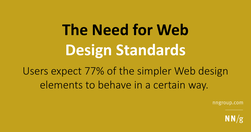
Good evidence why coming up with ever new, more "beautiful", "attractive" and trendy designs that "pop" is not always a good thing.
www.nngroup.com

Precise communication in a handful of words? The editors at BBC News achieve it every day, offering remarkable headline usability.
gerrymcgovern.com
"A link is a promise. A menu is a selection of promises. Without the link there is no Web."
medium.com

4 Steps to communicate anything clearly, according to a scientist who teaches quantum physics to kids
www.nngroup.com
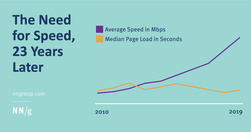
"In spite of an increase in Internet speed, webpage speeds have not improved over time."
uxdesign.cc

An interface to control a spacecraft - how complex and complicated does it have to be?
uxdesign.cc
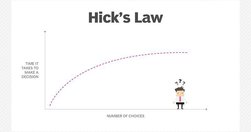
Choice seems appealing. But choice overload means we need longer to make decisions. Too long and people will abandon the task and look elsewhere.
www.wyliecomm.com

Choose ‘fluent’ words - short, simple, easy-to-pronounce terms
www.wyliecomm.com

Online writing - use more lists, use them bullets, use this template. "People love listicles. Lists get attention, reach skimmers and scanners, get remembered and shared."
boagworld.com
Help users to avoid making mistakes on your website and enable them to recover from a mistake made.
medium.com
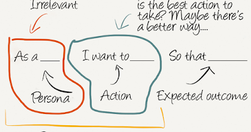
Using "job-stories" instead of "user-stories": "remove any sort of biases that the team might have for that persona. Personas create assumptions about the users that might not be validated."
Loading more...