
Tags
Filter 469 resources:
- user experience (109)
- ux (103)
- ux design (60)
- content design (43)
- web writing (42)
- artificial intelligence (41)
- guides (41)
- clear writing (41)
- ai (40)
- user experience design (38)
- design (36)
- guidelines (35)
- user experience research (33)
- content creation (29)
- usability (24)
- accessibility (22)
- user behaviour (22)
- web design (21)
- ux research (21)
- writing for web (21)
- user interface design (20)
- psychology and ux (20)
- copywriting (18)
- ux writing (18)
- design for websites (17)
- information architecture (14)
- study guide (14)
- interface design (14)
- design patterns (13)
- cognitive bias (11)
- communication (11)
- visual design (11)
- clear navigation (11)
- ui (11)
- cognitive psychology (11)
- user research (10)
- content management (9)
- writing for digital (9)
- design and ai (9)
- research methods (9)
- usability heuristics (9)
- readability (9)
- digital communication (9)
- style guide (8)
- audience research (8)
- heuristics (8)
- usability testing (8)
- search engine optimisation (7)
- writing (7)
- web copywriting (7)
- seo (7)
- biases (7)
- navigation (7)
- behavioral science (7)
- web content (6)
- clean language (6)
- prototyping (6)
- interaction design (6)
- writing sample (6)
- chatgpt (6)
- web architecture (6)
- web usability (6)
- content structure (6)
- photos (5)
- links (5)
- images (5)
- content (5)
- pdf (5)
- online reading (5)
- design thinking (5)
- design for mobile (5)
- glossary (5)
- team building (5)
- wireframe (5)
- eyetracking (5)
- generative ai (5)
- content strategy (5)
- information (5)
- card sorting (4)
- task based approach (4)
- prompt engineering (4)
- user interface (4)
- visuals (4)
- genai (4)
- customer (4)
- prompt structure (4)
- user testing (4)
- plain language (4)
- task completion (4)
- user journey (4)
- visual content (4)
- disinformation (4)
- recognition (4)
- fake news (4)
- ux slogan (4)
- design process (4)
- figma (4)
- design system (4)
- team-leader (3)
- kpi (3)
- generative artificial intelligence (3)
- inclusive design (3)
- analytics and metrics (3)
- ui design (3)
- headlines (3)
- know your audience (3)
- web development (3)
- user satisfaction (3)
- channel-optimised content (3)
- memory distortion (3)
- error messages (3)
- artificial-intelligence chatbot (3)
- user interview (3)
- accordions (3)
- application design (3)
- agile (3)
- forms (3)
- conversation (3)
- interaction (3)
- architecture (3)
- visual communication (3)
- ai interactions (3)
- teams (3)
- social media (3)
- webwriting (3)
- reading pattern (3)
- management (3)
- media (2)
- chat gpt (2)
- design kpi (2)
- distributed teams (2)
- tasks (2)
- bullet points (2)
- design principles (2)
- user flow (2)
- findability (2)
- conversational ai chatbot (2)
- content audit (2)
- mobile design (2)
- pattern recognition (2)
- digital reading (2)
- bad ui (2)
- features (2)
- autonomy (2)
- trust (2)
- responsive design (2)
- documents (2)
- websites (2)
- structure (2)
- customer experience (2)
- f-shaped pattern (2)
- product design (2)
- complexity (2)
- search (2)
- discoverability (2)
- flow (2)
- collaboartion (2)
- leadership (2)
- science communication (2)
- understanding (2)
- user mistakes (2)
- workflow (2)
- mobile ux (2)
- data protection (2)
- news (2)
- patterns (2)
- impostor syndrome (2)
- llm (2)
- website structure (2)
- metrics (2)
- team organisation (2)
- imposter syndrome (2)
- hick's law (2)
- persona (2)
- clear menu (2)
- self confidence (2)
- career (2)
- misinformation (2)
- tables (2)
- usability tests (2)
- tree-testing (2)
- open links in the same or a new browser tab (2)
- templates (2)
- multimedia (2)
- sentence length (2)
- openai (2)
- print reading (2)
- adaptive web design (2)
- layer cake pattern (2)
- voice and tone (2)
- ux and ai (2)
- testing (2)
- publishing (2)
- dark patterns (2)
- personas (2)
- web analytics (2)
- be a better person (2)
- bad ux (2)
- words matter (2)
- focus groups (1)
- business (1)
- burn out (1)
- code-switching (1)
- comprehension (1)
- top task approach (1)
- popups (1)
- mailchimp (1)
- checkboxes (1)
- number of clicks (1)
- email marketing (1)
- heat map (1)
- ux for mobile (1)
- ux copywriting (1)
- lists (1)
- job story (1)
- climate crisis (1)
- diet (1)
- visual-design principles (1)
- content innovation (1)
- consultant (1)
- html (1)
- homepage (1)
- redesign (1)
- jargon (1)
- life-hacks (1)
- storytelling (1)
- calculators and quizzes (1)
- content testing (1)
- a (1)
- breadcrumbs (1)
- google (1)
- banner blindness (1)
- key performance indicators (1)
- visual hierarchy (1)
- typography (1)
- minimalism (1)
- bullshit (1)
- user onboarding (1)
- headings (1)
- syndrome (1)
- algorithm (1)
- channels (1)
- edge cases (1)
- numbering (1)
- data visualisation (1)
- ux design strategy (1)
- cookie permission (1)
- loading speed (1)
- morale (1)
- vr (1)
- calculator and quizzes (1)
- cultural probe (1)
- heart model (1)
- connection (1)
- scanning (1)
- clarity (1)
- paradox of choice (1)
- desktop (1)
- mvp (1)
- impostor (1)
- balance (1)
- get things done (1)
- recall (1)
- consumption (1)
- conversation with an ai (1)
- social (1)
- long sentences (1)
- offline audience (1)
- simple language (1)
- imperative (1)
- fonts (1)
- jakob's law (1)
- impact measurement (1)
- debunking (1)
- words (1)
- smartwatch interaction (1)
- reporting (1)
- naming (1)
- demographic questions (1)
- gaze patterns (1)
- legal documents (1)
- read more (1)
- grit (1)
- reading score (1)
- processing (1)
- overpublishing (1)
- clear language (1)
- reaching people (1)
- empowerment (1)
- convertkit (1)
- surveys (1)
- categorisation (1)
- training (1)
- photography (1)
- intranet (1)
- metadata (1)
- local navigation (1)
- optimisation (1)
- paradigm (1)
- ux interviews (1)
- photo (1)
- environment (1)
- remote usability testing (1)
- apathy (1)
- email service (1)
- accessibility checklist (1)
- video (1)
- person (1)
- linkedin (1)
- team (1)
- usability assessment (1)
- qr code (1)
- happiness (1)
- nudging (1)
- file naming (1)
- migration (1)
- barlund's transaction model (1)
- choice (1)
- curse of knowledge (1)
- customer journey (1)
- web vs native app (1)
- transmission model (1)
- well-being (1)
- resentment (1)
- authority (1)
- marketing (1)
- user habits (1)
- neurodiversity (1)
- quantitative usability testing (1)
- product designer (1)
- decision making (1)
- tablet (1)
- smart watch (1)
- self-improvement (1)
- users are stupid (1)
- privacy (1)
- discovery (1)
- self-growth (1)
- illegal ux (1)
- strategic user-driven project assessment (1)
- zigzag pattern (1)
- minimal viable product (1)
- platform (1)
- well being (1)
- podcast (1)
- impact (1)
- professional association for design (aiga) (1)
- product management (1)
- be (1)
- text (1)
- research (1)
- project management (1)
- agent (1)
- easy-to-read (1)
- quantitative research (1)
- communication training (1)
- breakpoints (1)
- reading comprehension (1)
- stress (1)
- better (1)
- cognitive load (1)
- expectation (1)
- social science (1)
- unethical ux patterns (1)
- multichannel (1)
- supa (1)
- politics (1)
- live validation (1)
- pagination (1)
- natural language ai chatbot (1)
- virtual-reality (1)
- networks (1)
- scrolling (1)
- response time (1)
- mobile accessibility (1)
- skimming (1)
- web maintenance (1)
- framing (1)
- mobile (1)
- repository (1)
- prompt frames (1)
- content inventory (1)
- double diamont model (1)
- map (1)
- user task (1)
- information patterns (1)
- designing for older adults (1)
- data visualisations (1)
- product manager (1)
- work-life (1)
- emotional design (1)
- analytics (1)
- branding (1)
- working from home (1)
- remember (1)
- internal communication (1)
- remote working (1)
- chunking (1)
- link label (1)
- empathy maps (1)
- grow (1)
- restore (1)
- qualitative testing (1)
- files (1)
- contract templates (1)
- clicks (1)
- user story (1)
- rot analysis (1)
- cross-functional team (1)
- quantitative (1)
- maps (1)
- self esteem (1)
- accuracy (1)
- pinball pattern (1)
- development (1)
- data-viz (1)
- engagement (1)
- political communication (1)
- footer (1)
- user feedback (1)
- website menus (1)
Relevant Overviews
jonyablonski.com

This article explores a few cognitive biases I’ve experienced first-hand as well as strategies for mitigating their influence.
gerrymcgovern.com
As designers, as creators and managers of websites and apps, we can start by focusing on two principles: Do not track Delete
www.niemanlab.org

After getting replies that debunked false political news they’d shared, users were more likely to share low-quality news.
www.nngroup.com
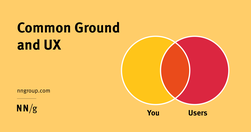
Any efficient communication requires that communication partners establish and rely on common ground so that they can take communication shortcuts.
www.nngroup.com
Succinctly documenting the right details in key places helps Agile teams avoid information overload. When UX documentation is skipped or disorganized, teams waste time trying to find or remember information instead of improving the product.
www.nngroup.com

A survey of people in user experience and product management shows that these professionals disagree on who should be responsible for many key tasks, like doing discoveries and early design.
www.nngroup.com

Persistent headers can be useful to users if they are unobtrusive, high-contrast, minimally animated, and fit user needs.
www.nngroup.com
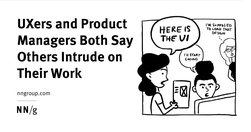
A survey of 372 UX and PM professionals shows that duplicative work is frequent and generates confusion and inefficiency.
www.nngroup.com
Frequent major redesigns and changes throughout the interface support users’ need to learn and adapt to new situations.
www.i-scoop.eu
The single most important thing I’ve learned about online marketing is that it is about paying attention. Offline marketing is about getting attention, but once someone is on your website, they know what they want to do, so your first job is to help them do what they came to you website to do as quickly and easily as possible.
www.nngroup.com

Vertical navigation is a good fit for broad or growing IAs, but takes up more space than horizontal navigation. Ensure that it is left-aligned, keyword front-loaded, and visible.
Like
ux,
web design,
information architecture,
user experience,
clear menu,
clear navigation,
visual design
gerrymcgovern.com
90% of data does not get used three months after it’s published. Most Web teams know that they are not working in a professional manner, and yet they feel that there is nothing they can do about it. Digital has in so many ways destroyed content professionalism.
theconversation.com

The authors of the article "wanted to know more about what really helps scientists talk to the public". Science is essential to solving many of society’s biggest problems, but it doesn’t always find a receptive audience. Today, when curbing COVID-19 ... it’s more urgent than ever for scientists to be able to communicate effectively with the public.
design.zeta.in
For digital designers who want to organise their working files to improve clarity and collaboration within and across teams
uxdesign.cc

Clarity, not creativity, is the backbone of good UX writing. Choose simple words and craft shorter sentences. Explain acronyms users might not know. Use proper punctuation. Be extra careful about things like cleverness, wordplay, and idioms that might affect usability. Above all, write to be understood.
www.nngroup.com
Although successful websites typically have high usability, average sites can hurt their business by copying design elements that don't work well in other contexts.
www.nngroup.com
While it is important to keep key information easily accessible, the 3-click rule is an arbitrary rule of thumb that is not backed by data.
boagworld.com

Probably my biggest frustrations ... is the utter contempt they seem to hold content in. ... they won’t hire a professional copywriter to work on the content ... never teach content creators how to create appropriate web content.
Do
ux,
web design,
content,
web writing,
content creation,
web architecture,
user experience,
content management,
copywriting
www.wyliecomm.com

Don’t start with the blah blah blah
futurecrunch.com

Social science: Instead of calling it science though, we should call it what it is: pattern recognition. That's a far better description of what sociologists, historians, geographers, economists and anthropologists actually do.
www.nngroup.com

Summary: For mobile navigation, image grids should be saved for deeper IA levels where visual differentiation between menu items is critical, as they increase page load times, create longer pages, and cause more scrolling.
gerrymcgovern.com
We must design things on the basis that we want them to last, ... Because when you expect nothing to last, nothing does.
www.wyliecomm.com

Imperative voice gets shared. Imperative voice boosts email click, open and read rates.
www.nngroup.com

A clear visual hierarchy guides the eye to the most important elements on the page. It can be created through variations in color and contrast, scale, and grouping.
Like
ux,
web design,
content,
user experience,
visual communication,
visual content,
visual hierarchy
www.fearlessculture.design

Forget Empowerment. Encourage Autonomy Instead. ... People also need authority.
Like
self confidence,
be a better person,
team-leader,
teams,
team building,
autonomy,
distributed teams,
empowerment,
authority
sarah-weiler.medium.com
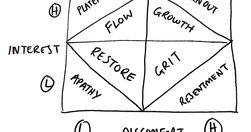
"WHY did I want to quit? ... — ‘is it disinterest or discomfort?’"
www.nngroup.com

Jakob Nielsen's 10 general principles for interaction design. They are called "heuristics" because they are broad rules of thumb and not specific usability guidelines.
boagworld.com

The biggest challenge for distributed teams lies in communication and collaboration.
Like
team,
communication,
team building,
collaboartion,
remote working,
working from home,
distributed teams
boagworld.com
"Users rarely read an entire webpage. That means you need to adopt a different style when writing for the web. A style that accommodates this lack of attention."
reesmccann.com
Want a handy list of the core Clean Language questions? Here goes:
Loading more...