
Relevant Overviews
- Communication Strategy
- Content Strategy
- Knowledge4Policy
- Fediverse
- Online Strategy
- Online Community Management
- Social Media Strategy
- Content Creation & Marketing
- Online Architecture
- Digital Transformation
- Change & Project Management
- Personal Productivity
- Innovation Strategy
- Surveillance Capitalism, Social media and Polarisation (Overview)
- Disinformation in the US 2020 elections
- Communications Tactics
- Psychology
- Social Web
- Media
- Politics
- Communications Strategy
- Science&Technology
- Business
Overview: Communication Strategy
Communications appears complex. But a good communication strategy shouldn't be.
4-steps, 4 tables
I generally boil it all down to four simple, interrelated tables, defining:
- Who you’re trying to reach: your audiences, including their needs and information preferences, and what your goals are for them
- Why they should pay attention to you: starting with your Unique Value Proposition, craft a Global Elevator Pitch, and from that derive Editorial Messaging for each audience, reflecting their needs (above)
- How you will get those messages to those audiences: an integrated, mutually supportive communications portfolio
- When you will monitor and optimise those activities: key metrics, analyses and optimisation processes.
Process
A Word document entitled "communication strategy" gathering dust on a shelf is no use to anybody. The only way your strategy will have an impact is if:
- you engage your colleagues during its development - after all, they have some of the answers you'll need;
- and your ensure they understand the strategy once it's finalised - after all, their cooperation will be critical to its success.
There are many ways to go about this. My favourite option is to spend a few hours a week interviewing diverse members of your comms team and holding one or two workshops with them and others. That way we'll develop buy-in together along the way, and I'll be able to mentor your staff so that they can better implement the strategy.
But if that's not possible right now, I boiled my process down into an online course: 4-Step Communication Strategy Framework: demystify communications strategy
Relevant resources
mathewlowry.myhub.ai
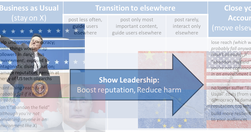
I know: you've spent probably ~15 years diligently developing your following there. At the beginning Twitter was fun, particularly when you didn't have so many followers that you couldn't interact with at least some of them. But now, you may have a problem.
medium.com

How a decades-long election delegitimisation campaign, amplified by social media disinformation, intersects with the death of a Chief Justice in a GoT-worthy season finale of “US democracy: Endgame”.
Think
facebook,
metrics,
vote,
disinformation,
newsletter,
us2020,
delegitimise,
flicc,
ginsburg,
suppress
medium.com

It’s taken me over ten years to move from enthusiasm, through frustration into a Zen-like state where I no longer blog about EU comms. But when the Eurobloggers called, I had to answer ;)- my link in the #EU09vs19 blog chain …
Think
social media,
community,
participation,
eu,
blogging,
communications,
bloggingportal,
eu09vs19
medium.com
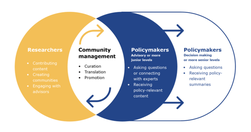
Latest on the K4P Medium Publication
Think
k4p,
ux,
community,
audience research,
science communication,
communications,
evidence-based policy
medium.com

Fake News is suddenly on the boil in the Brussels Bubble. Here are some ideas I brainstormed earlier this week. Comments welcome.
mathewlowry.myhub.ai
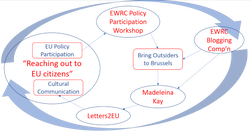
I’ve recently published five posts on three interrelated ideas, two projects one report and a workshop. That happened because the competition brought a Brussels Bubble Outsider to Brussels. Which happens to be one principle of the participation model I presented at the EWRC workshop. Full circle.
Think
participation,
eu,
influence,
ewrc2017,
letters2eu,
newsletter,
vandenbrande,
cultural exchange,
brussels bubble
medium.com

Engaging Europeans with the EU requires a new Brussels Bubble culture - fourth of several posts written in reaction to Luc van den Brand’s Reaching out to EU Citizens: A New Opportunity.
medium.com

Could hybrid crowdfunding allow public Institutions to support citizen-driven projects without killing them in the cradle?- 2nd post in reaction to Luc van den Brande’s Reaching out to EU Citizens: A New Opportunity
Think
social media,
eu,
propaganda,
communications,
crowdfunding,
letters2eu,
vandenbrande,
cultural exchange
medium.com
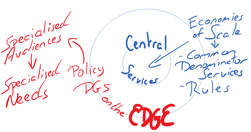
EUrope’s success in eliminating mobile roaming charges may be the first “data4policy” case study where the data was website traffic, and illustrates the rewards of allowing innovation to flourish at the edges of large organisations.
mathewlowry.myhub.ai

Fighting people with facts only makes them cling to their beliefs more strongly, further polarising our damaged societies. Different tactics are needed, and they start closer to home than you think.
Think
social media,
psychology,
persuasion,
cognitive,
backfire effect,
filter bubble,
brexit,
polarization,
europa,
disinformation,
dissonance,
eurosceptics,
yanss
medium.com

An effective communications strategy must be connected to other strategies, usually managed by different departments. Reframing it as central to your organisation’s innovation strategy helps sidestep turf wars.
chatbotsmagazine.com
3rd of my posts for Chatbots Magazine: Chatbots allow governments and other public bodies to provide citizens highly customised content and services. And invade their privacy. Citizens deserve better choices.
mathewlowry.myhub.ai
Three articles unpacking the relationship between community, communications, content and EU communications.
mathewlowry.myhub.ai

I finally vlogged my first event. Some first impressions.
mathewlowry.myhub.ai
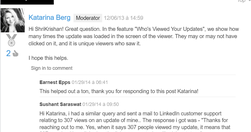
Just putting this up there for all those who think:a) a ‘view’ on a LinkedIn post is like a pageview on your blog or site. It’s not: it’s a ‘stream view’, a la Facebook, and does not tell you how many people actually clicked and readb) LinkedIn are consistent and care about their bloggers. They aren’t and they don’tMore: see LinkedIn Community for…
mathewlowry.myhub.ai

What happened when I was invited to “do a Rápido” at the IABC’s conference in Rotterdam earlier this week.
mathewlowry.myhub.ai

EurActiv.com is opening one of its media innovations to other media interested in increasing competitiveness through translated syndication. (Update, 31/3/16: this project was covered, among many other things, in an interview with professional EU interpreter Alexander Drechsel in his podcast Demos ex machina? Multilingual communication with Mathew…
mathewlowry.myhub.ai
The main Topics this time are language technology, mobile innovation and EU communications, with a few extras to catch-up since the last edition.
Think
content strategy,
bot,
semantic,
strategy,
mobile,
messaging,
newsletter,
language technology,
euractiv
mathewlowry.myhub.ai

The afternoon session at Future Media Lab 2016 showed that while European media are warming to the idea of using advanced language technologies to share content across borders, their audiences are already well ahead of them.
mathewlowry.myhub.ai

With independent journalism increasingly looking like an endangered species, a EU communication strategy that helped European media build the European Public Sphere would be a smarter longterm move than propaganda and brochureware
mathewlowry.myhub.ai
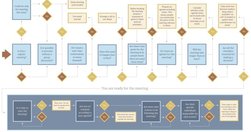
Over 40 new resources ... some great longreads to enjoy as the nights grow long, the productivity tips you’ll need to find the time to read them, and a free set of steak knives. The Christmas season, after all, is almost upon us.
Think
psychology,
productivity,
innovation,
community,
addiction,
instagram,
communications,
gtd,
longform,
disruption,
authenticity,
newsletter
mathewlowry.myhub.ai

This week NHSCitizen - one of the case studies I brought to myEuroPCom 2015 workshop on online communities- holds its first NHSCitizen Assembly, where the NHS Board meets citizens to ActionPlan the participants' top 5 priorities. Time to summarise the Hangout-On-Air I had on NHSCitizen with the Democratic Society's Anthony Zacharzewski,
mathewlowry.myhub.ai
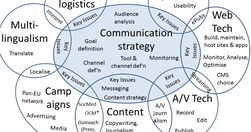
The number and diversity of communications skills needed to implement a communications strategy never stops growing. How are you organising them?
mathewlowry.myhub.ai
In this week’s edition, a months’ reading - some 30 posts - on social media, digital transformation, content/system design and EuroPCom2015. But first some news from me
mathewlowry.myhub.ai

I recently had a great live Hangout with Ezri Carlebach and Charlelie Jourdan to discuss visual communications, taking risks and creating energy in conferences.
mathewlowry.myhub.ai
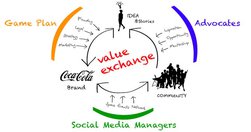
Do people really want to have a conversation with brands, or their government?
mathewlowry.myhub.ai

How do you extract maximum value from a conference presentation or workshop, both for you, and your audience?

mathewlowry.myhub.ai
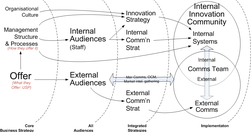
Any decent Communication Strategy will integrate offline, online, internal and external communications. But what about your organisation's Innovation Strategy?
mathewlowry.myhub.ai
In this edition I highlight only one post, and mention a few others. Topics: truth, authenticity & trust, but also productivity and digital transformation.
Relevant Overviews
- Communication Strategy
- Content Strategy
- Knowledge4Policy
- Fediverse
- Online Strategy
- Online Community Management
- Social Media Strategy
- Content Creation & Marketing
- Online Architecture
- Digital Transformation
- Change & Project Management
- Personal Productivity
- Innovation Strategy
- Surveillance Capitalism, Social media and Polarisation (Overview)
- Disinformation in the US 2020 elections
- Communications Tactics
- Psychology
- Social Web
- Media
- Politics
- Communications Strategy
- Science&Technology
- Business