
Tags
Filter 1351 resources:
- media (473)
- news (369)
- disinformation (252)
- facebook (197)
- social media (176)
- journalism (153)
- curation (137)
- content strategy (97)
- community (96)
- comments (94)
- filter bubble (75)
- publicsphere (70)
- algorithm (60)
- ai (58)
- native advertising (57)
- eu (56)
- us2020 (56)
- factchecking (55)
- psychology (51)
- longform (48)
- advertising (46)
- trump (46)
- data journalism (39)
- storytelling (39)
- bloggingportal (36)
- twitter (35)
- politics (33)
- troll (33)
- trust (33)
- podcast (31)
- google (29)
- audiovisual (27)
- polarization (27)
- medium (26)
- content (26)
- democracy (26)
- augmented reality (26)
- instant articles (26)
- innovation (25)
- covid19 (25)
- mobile (25)
- engagement (24)
- multilingualism (24)
- us (24)
- propaganda (24)
- newsletter (23)
- ocm (22)
- science (22)
- bias (21)
- myhub (21)
- video (20)
- bot (20)
- tool (20)
- nytimes (20)
- metrics (19)
- identity (19)
- data (19)
- conspiracy (19)
- productivity (19)
- content marketing (18)
- cognitive (17)
- brexit (17)
- bullshit (17)
- censorship (17)
- explainer (17)
- newsroom (17)
- politicoeu (16)
- blogging (16)
- atprotocol (16)
- semantic (16)
- enewsletter (16)
- delegitimise (16)
- open web (16)
- bbc (15)
- regulation (15)
- fediverse (15)
- data visualisation (15)
- blog (14)
- platform (14)
- online architecture (14)
- science journalism (14)
- promotion (14)
- communications (14)
- privacy (13)
- bloggingportal2 (13)
- design (13)
- cms (13)
- amp (13)
- clickbait (13)
- groupthink (12)
- blockchain (11)
- ea (11)
- web20 (11)
- machine learning (11)
- llm (11)
- cambridge analytica (10)
- virtual reality (10)
- backfire effect (9)
- bluesky (9)
- business model (9)
- post-truth (9)
- media literacy (9)
- domestic (9)
- science communication (9)
- atomisation (9)
- visualisation (9)
- hoax (9)
- russia (9)
- qanon (9)
- bxlsbbl (8)
- europe (8)
- ai4communities (8)
- usa (8)
- brussels bubble (8)
- open source (8)
- blogpocalypse (8)
- crowdsourcing (8)
- web (7)
- quartz (7)
- vote (7)
- circa (7)
- authenticity (7)
- marketing (7)
- copyright (7)
- sponsored content (7)
- buzzfeed (7)
- gtd (7)
- interactive (7)
- populism (7)
- chatgpt (7)
- monetisation (7)
- linkedin (6)
- 2ndbrain (6)
- event (6)
- ec (6)
- headline (6)
- apple (6)
- app (6)
- pay4content (6)
- web design (6)
- seo (6)
- euractiv (6)
- knowledge management (6)
- information (6)
- ux (6)
- eurosceptics (6)
- snapchat (6)
- moderation (6)
- tribe (6)
- bestof2015 (6)
- suppress (6)
- fascism (6)
- vox (5)
- nlp (5)
- gender (5)
- analytics (5)
- dni (5)
- theme (5)
- substack (5)
- persuasion (5)
- pr (5)
- collective intelligence (5)
- narratives (5)
- jeff jarvis (5)
- cory doctorow (5)
- anti (5)
- machine translation (5)
- audience research (5)
- guardian (5)
- framework (5)
- editorial (5)
- personal (5)
- society (5)
- moments (5)
- climate (5)
- culture (4)
- wikipedia (4)
- ethics (4)
- strategy (4)
- context (4)
- europa (4)
- startup (4)
- corporate journalism (4)
- influence (4)
- chat (4)
- surveillance (4)
- creativity (4)
- hate (4)
- fbpaper (4)
- partisan (4)
- coral (4)
- inoculation (4)
- credibility (4)
- sceptic (4)
- top3pods (4)
- stream (4)
- futurism (4)
- confirmation bias (4)
- realtime (4)
- uk (4)
- collaboration (4)
- antivaxxer (4)
- bundle (4)
- zettelkasten (4)
- blm (4)
- instagram (4)
- tv (4)
- notification (4)
- yanss (4)
- publishing (4)
- solutions journalism (4)
- guide (4)
- lobby (4)
- sublime (4)
- free speech (4)
- future (4)
- viral (4)
- education (4)
- meme (4)
- policy (3)
- adblock (3)
- cards (3)
- faq (3)
- slack (3)
- semanticweb (3)
- misinform (3)
- debunk (3)
- motivated (3)
- outrage (3)
- share (3)
- paywall (3)
- paper (3)
- decentralised (3)
- local (3)
- atprotocol lexicon (3)
- search (3)
- infowar (3)
- youtube (3)
- blogactiv (3)
- vine (3)
- radio (3)
- infopocalypse (3)
- eurosceptic (3)
- participation (3)
- interface (3)
- rebelmouse (3)
- management (3)
- homepage (3)
- signal2noise (3)
- aggrefilter (3)
- (3)
- explanatory (3)
- english (3)
- personalisation (3)
- wapo (3)
- euroblog (3)
- digital transformation (3)
- attentionweb (3)
- echo chamber (3)
- deep fake (3)
- visual (3)
- gpt-x (3)
- mobocracy (3)
- coda (3)
- machine text (3)
- crowdfunding (3)
- gamification (3)
- livestream (3)
- river4 (2)
- taxonomy (2)
- livefyre (2)
- hr (2)
- egovernment (2)
- expert (2)
- portal (2)
- nuzzle (2)
- psychometrics (2)
- mediafr (2)
- writing (2)
- fivethirtyeight (2)
- training (2)
- optimisation (2)
- scraping (2)
- addiction (2)
- ai prompt (2)
- ft (2)
- photography (2)
- responsive (2)
- audio (2)
- vice (2)
- counter speech (2)
- balance (2)
- opinion (2)
- traffic (2)
- messaging (2)
- botshit (2)
- technology (2)
- enshittification (2)
- sentiment analysis (2)
- sari azout (2)
- ai search (2)
- new public (2)
- mvp (2)
- robert putnam (2)
- ep (2)
- idpi (2)
- election (2)
- signaltonoise (2)
- agile (2)
- inscrutable (2)
- api (2)
- syndication (2)
- b2b4me (2)
- spain (2)
- open science (2)
- economics (2)
- digital (2)
- atproto adoption (2)
- digg (2)
- outreach (2)
- computational propaganda (2)
- sovereignty (2)
- infographic (2)
- memory (2)
- image (2)
- wiki (2)
- research (2)
- lobbying (2)
- brand (2)
- humour (2)
- multimedia (2)
- ios (2)
- history (2)
- philosophy (2)
- roamresearch (2)
- pluralistic ignorance (2)
- china (2)
- storyful (2)
- rss (2)
- pink slime (2)
- facebook live (2)
- activitypub (2)
- interoperability (2)
- flicc (2)
- automation (2)
- disruption (2)
- hoaxy (2)
- posse (2)
- bookmark (2)
- library (2)
- trending (2)
- gdpr (2)
- ltinnovate2016 (2)
- memex (2)
- mastodon (2)
- 360video (2)
- arg (2)
- html5 (2)
- conversation (2)
- organisation (2)
- curatorbot (2)
- loyalty (2)
- mybot (2)
- magazine (2)
- impact (2)
- truth (2)
- obsidian (2)
- team (2)
- blogtour (2)
- buzzbot (2)
- web2.0 (2)
- circa2 (2)
- tools (2)
- cookies (2)
- themes (2)
- basic (2)
- gawker (2)
- dunning-kruger (2)
- euractiv-com (2)
- faceted search (2)
- reflectivity (2)
- civil rights (2)
- skills (2)
- syndicated-translation (2)
- postmodern (2)
- ecology (1)
- k4p (1)
- project management (1)
- framing (1)
- report (1)
- presentation (1)
- transparency (1)
- reddit (1)
- cmv (1)
- fear (1)
- consultation (1)
- conversational (1)
- liberalism (1)
- ngo (1)
- business (1)
- garden (1)
- compass news (1)
- willpower (1)
- stack overflow (1)
- po.et (1)
- truthbuzz (1)
- polbot (1)
- metaphor (1)
- fakebox (1)
- knowledge panel (1)
- overfitting (1)
- risk (1)
- wikitribune (1)
- define (1)
- quiz (1)
- expertise (1)
- intro (1)
- ipr (1)
- software (1)
- spambot (1)
- knowledge illusion (1)
- insurge (1)
- geopolitics (1)
- power (1)
- eaststratcom (1)
- desirability (1)
- npr (1)
- honesty (1)
- omission (1)
- web development (1)
- tourism (1)
- perception (1)
- lean canvas (1)
- free (1)
- illusory (1)
- halo (1)
- comics (1)
- scrollytelling (1)
- wisdom (1)
- schema.org (1)
- mindfulness (1)
- remote (1)
- conference (1)
- law (1)
- serendipity (1)
- network theory (1)
- slow news (1)
- european (1)
- commonplace (1)
- empathy (1)
- negativity bias (1)
- coach (1)
- holacracy (1)
- truth psychology (1)
- “illusory (1)
- transmedia (1)
- snowfall (1)
- italy (1)
- euro (1)
- social capital (1)
- scandinavia (1)
- health (1)
- altright (1)
- periscope (1)
- slideshow (1)
- discourse (1)
- referrals (1)
- vr (1)
- freelancer (1)
- authoritarianism (1)
- fomo (1)
- city (1)
- citizen journalism (1)
- freedom (1)
- social marketing (1)
- user (1)
- newsfeed (1)
- playbook (1)
- parse.ly (1)
- experience (1)
- liquid democracy (1)
- ethereum (1)
- filter (1)
- feed (1)
- mixed reality (1)
- youth (1)
- atlantic (1)
- creativecommons (1)
- radicalisation (1)
- google analytics (1)
- bubble (1)
- apple news (1)
- upday (1)
- samsung (1)
- emergingus (1)
- webgl (1)
- 3d (1)
- line (1)
- sponsor (1)
- the conversation (1)
- mooc (1)
- useful (1)
- centralised (1)
- membership (1)
- diig (1)
- slideshare (1)
- epsc (1)
- text (1)
- cx (1)
- isis (1)
- partnership (1)
- atavist (1)
- longreads (1)
- mediumform (1)
- theoretical physics (1)
- einstein (1)
- terrorism (1)
- agriculture (1)
- independence (1)
- obama (1)
- meaning (1)
- europcom (1)
- list (1)
- listapp (1)
- keyword (1)
- guidelines (1)
- documentum (1)
- fuego (1)
- slidecast (1)
- gmo (1)
- network (1)
- bioethics (1)
- genetic (1)
- language (1)
- australia (1)
- lofi (1)
- animation (1)
- blendle (1)
- iot (1)
- apathy (1)
- slacktivism (1)
- roi (1)
- adaptive content (1)
- hive (1)
- trove (1)
- hbr (1)
- trends (1)
- ello (1)
- wikileaks (1)
- shieldlaw (1)
- shortform (1)
- nsa (1)
- google+ (1)
- paid (1)
- yahoo (1)
- campaign (1)
- abtesting (1)
- evolution (1)
- programmatic (1)
- happeningo (1)
- calendar (1)
- paradigm (1)
- anonymity (1)
- archive (1)
- ukraine (1)
- eeas (1)
- screencast (1)
- upshot (1)
- tabloid (1)
- chinese (1)
- python (1)
- right (1)
- expiration (1)
- governance (1)
- values (1)
- ombudsman (1)
- citizenship (1)
- publicsector (1)
- snowden (1)
- native (1)
- newsana (1)
- newscred (1)
- muckread (1)
- pinterest (1)
- eurocrap (1)
- recap (1)
- belgium (1)
- social (1)
- information architecture (1)
- letters2eu (1)
- vandenbrande (1)
- cultural exchange (1)
- employee engagement (1)
- messenger (1)
- broadcast (1)
- co-creation (1)
- language technology (1)
- help (1)
- debatehub (1)
- ep2014 (1)
- stanbol (1)
- apache (1)
- meps (1)
- prezi (1)
- scale (1)
- pilot (1)
- roaming (1)
- eesc (1)
- google glass (1)
- colfdusion (1)
- conform (1)
- green (1)
- blogosphere (1)
- disgustology (1)
- data void (1)
- hololens (1)
- tracking (1)
- firefox (1)
- notd (1)
- annotate (1)
- indieweb (1)
- bertelsmann (1)
- digital civility (1)
- bookmarklet (1)
- post-alpha (1)
- alpha phase (1)
- saas (1)
- presseurop (1)
- neural link (1)
- data4policy (1)
- geofence (1)
- pro (1)
- sociology (1)
- blackpr (1)
- yeats (1)
- newsguard (1)
- threadapalooza (1)
- gatsby (1)
- data portability (1)
- philippines (1)
- curiosity (1)
- euvsdisinfo (1)
- syllabus (1)
- wikinews (1)
- ussr (1)
- imposter syndrome (1)
- cancel culture (1)
- dissonance (1)
- critical theory (1)
- woke (1)
- circuit-breaker (1)
- cui bono (1)
- peace data (1)
- information laundering (1)
- plandemic (1)
- ginsburg (1)
- section230 (1)
- participatory culture (1)
- splinternet (1)
- fleeting (1)
- adversarial interoperability (1)
- planetary (1)
- scuttlebutt (1)
- trust net (1)
- early adopter (1)
- sensemaking (1)
- tiktok (1)
- deplatform (1)
- discord (1)
- anonymous (1)
- floc (1)
- plato (1)
- metaverse (1)
- label (1)
- cookiepocalypse (1)
- flipboard (1)
- fedwiki (1)
- presidency (1)
- cozyweb (1)
- social-media (1)
- publicsectorinformation (1)
- cluetrain (1)
- programmes (1)
- rebuttal (1)
- lisp (1)
- yellow-card (1)
- life-in-belgium (1)
- hungarian (1)
- accreditation (1)
- infosociety (1)
- eparticipation (1)
- monitoring (1)
- justice-home-affairs (1)
- comment (1)
- nft (1)
- notion (1)
- knowledge visualisation (1)
- elon musk (1)
- knowledge graph (1)
- pkm (1)
- procrastination (1)
- 3p framework (1)
- oatmeal (1)
- speech to text (1)
- transcript (1)
- agora (1)
- flancian (1)
- scaling synthesis (1)
- massive.wiki (1)
- twitter migration (1)
- autosummarise (1)
- perplexity.ai (1)
- nat eliason (1)
- digital garden (1)
- binggpt (1)
- startupy (1)
- stochastic parrot (1)
- christopher manning (1)
- emily m bender (1)
- bingchat (1)
- safety (1)
- ai-agent-gpt (1)
- quit (1)
- douglas rushkoff (1)
- experiment (1)
- alan blackwell (1)
- criti-hype (1)
- joan westenberg (1)
- pluriverse (1)
- vsop (1)
- pubhub (1)
- public affairs (1)
- talia stroud (1)
- eli pariser (1)
- brave (1)
- bluesky custom feeds (1)
- unfinished (1)
- whitewind (1)
- insurrection (1)
- sill (1)
- leaflet (1)
- eurosky (1)
- cosmik (1)
- graze (1)
- renee diresta (1)
- middleware (1)
- semble (1)
- gander (1)
- wef (1)
- ai reasoning (1)
- claude code (1)
- simon willison (1)
- standard.site (1)
- damien van achter (1)
- vancouver2026 (1)
- atmosphereconf2026 (1)
- attie (1)
- atscience (1)
Relevant Overviews
- Communication Strategy
- Content Strategy
- Online Strategy
- Online Community Management
- Social Media Strategy
- Content Creation & Marketing
- Online Architecture
- Digital Transformation
- Surveillance Capitalism, Social media and Polarisation (Overview)
- Communications Tactics
- Psychology
- Social Web
- Media
- Politics
- Communications Strategy
- Science&Technology
- Business
Overview: Media
Relevant resources
digiday.com

Last spring, the Financial Times altered its former metered access model and introduced paid trials, letting users pay £1 ($1.42) for a month’s access to content. At the same time, the newspaper also changed its policies toward social platforms and began making more content free to people coming to its site from Google, Facebook and Twitter. It la…
digiday.com

For The Atlantic, sponsored content has proved better ROI than other ad formats. Native advertising is estimated to reach around 75 percent of The Atlantic’s ad revenue this year, up 15 percent from 2015... a spectrum of native ads, from video to infographics to text-based editorial pieces
digiday.com

At The Guardian’s Media Summit in London, those publishers and others discussed what’s working for them with their platform strategies, and how sustainable off-site publishing is likely to be for media companies in the long term... Cosmo’s Snapchat Discover editions get 76 percent completion rates... 56 percent ... coming back to us five days …
mathewlowry.myhub.ai

EurActiv.com is opening one of its media innovations to other media interested in increasing competitiveness through translated syndication. (Update, 31/3/16: this project was covered, among many other things, in an interview with professional EU interpreter Alexander Drechsel in his podcast Demos ex machina? Multilingual communication with Mathew…
thebaffler.com

Also called native advertising, sponsored content borrows the look, the name recognition, and even the staff of its host publication to push brand messages on unsuspecting viewers... the line between what’s sponsored and what isn’t—between advertising and journalism—has already been rubbed away. who would bother pitching a story to The Atlantic …
www.cjr.org

SOMETHING REALLY DRAMATIC is happening to our media landscape, the public sphere, and our journalism ... without the level of public examination and debate it deserves. news publishers have lost control over distribution... increase in power of social media companies... a far greater concentration of power ... Networks favor economies of scale,…
medium.com

Comments on our own content create real community and offer vital feedback to content creators and consumers both. And thus, we should fight for them to be better. Comments are not just a nice-to-have but a core part of a media site’s mission... Lots of broken comment systems are designed for a platonic ideal of how people ought to behave.... Can …
www.niemanlab.org
Civil Comments, a commenting platform ... aims to produce respectful dialogue in comment sections through a system that crowdsources comment moderation... Commenters are shown two random comments from elsewhere on the site, and must rate the comments’ quality and civility and determine whether they include harassment, abuse, or personal attacks. T…
www.prospectmagazine.co.uk

the Guardian is a great newspaper whose survival should concern us all... Digital revenues, which had been predicted to increase to £100m in the current financial year, are stuck at around £80m, while advertising print revenues have declined by about 20 per cent... Nor could anyone dispute that the Guardian’s website has been highly successful. I…
www.poynter.org

ProPublica, for example, has always encouraged others to “steal its stories” — which has both increased pageviews and resulted in thousands of sites reprinting their pieces. I see Creative Commons licensing as a smart way to distribute local or national content when the goal is maximum impact... [and] as an important survival tool for smaller an…
www.niemanlab.org
The module formerly known as Watching is linking out less than it used to, but the Times says it still believes in curating... we are just trying to figure out the right balance between New York Times stories and outside sources; how to offer smart, meaningful curation to our readers.
medium.com
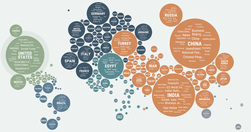
Search engines, social media and news aggregators are great at surfacing information close to our interests, but they are limited by the set of topics and people we choose to follow. Even if we read multiple news sources every day, what we discover is defined by the languages we are able to read, and the topics that our sources decide to cover. Ul…
www.vox.com

But how did Belgium find itself at the center of a burgeoning terrorist network? Here are a few sources of reading to help you get a clearer picture.
niemanreports.org

It's not just science reporters who need to evaluate research and learn to tell good studies from bad... perhaps the biggest challenge facing today’s science journalists: Evaluating and interpreting complex and sometimes contradictory results at a time when so many news stories... rely on a fairly sophisticated understanding of science. That make…
www.theverge.com

she and her team record real audio and motion capture data, then work it into a digital recreation of an event. It's an unusual technique that lets people not just see an event, but explore it.
www.americanpressinstitute.org

News is a product... our news products must be good and targeted to succeed. They must know who their users are, what they need, how they need it, and deliver a satisfying experience. That is what a product manager does... thinking about what users ... need from the whole of that product; what their experience of it is like; how it could be more c…
digiday.com

Email, for all the claims of it being dead, is critical for many publishers as a distribution (and marketing) channel they continue to control... Email newsletters have become an important part of publishers’ audience development strategies as a way to deepen their relationship with readers by providing an antidote to the endless stream of news in…
www.niemanlab.org
The New York Times smartphone products now have redefined Page One for the digital era. Finally, we have a model. Mobile can be harnessed to share the day’s news, and works far better to keep us informed than newsprint ever could....engagement — more minutes, now especially in mobile — drives subscription sales, retention, and the ability to incre…
www.fastcompany.com

To understand what makes BuzzFeed tick, you need to know how Dao Nguyen thinks about data... As the value of content approaches zero, "Having technology, data science, and being able to know how to manage, optimize and coordinate your publishing is the thing that gives you a competitive advantage"... One myth is data scientists are telling report…
www.demos.co.uk

sometimes people post disagreeable or disturbing content that does not violate Facebook's policies. This paper explores the potential of community-driven counter-speech to play a critical role in challenging and diminishing these type of posts on social media. Counter-speech is a common, crowd-sourced response to extremism or hateful content... F…
www.computing.co.uk

Berners-Lee suggested a simple rethink in how social networks and human nature work together could help curtail negative behaviour... "we have responsibility to think how to build systems that tend to produce constructive criticism and harmony as opposed to negativity and bullying."
www.brookings.edu

the press help shed sunlight on the inner workings of government, expose flaws and problems in our system, and inform the citizenry, making journalism a cornerstone of a healthy democracy... explanatory journalism... is particularly worthy of attention for its role in improving public knowledge and contributing to a more informed populace.The vide…
mathewlowry.myhub.ai

I've been invited to prepare a "Technology Buyer Challenge" on Hashtag Platform for the Language Technology Industry Summit this May. (Update, 31/3/16: this project was covered, among many other things, in an interview with professional EU interpreter Alexander Drechsel in his podcast Demos ex machina? Multilingual communication wit…
medium.com

"So you think “President Trump” is the worst case scenario?" - Some thoughts, originally on my oldblog and then updated on Medium:
www.nytimes.com
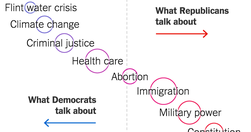
Democrats and Republicans sometimes seem to be living in two different Americas. We analyzed the past seven debates on each side to show which topics are most discussed within each party (nice, simple data visualisation here)
mathewlowry.myhub.ai

So you think "President Trump" is the worst case scenario? The rise of American authoritarianism provides the best article I've read explaining the Rise of Trump, even if it's a bit longer than previous favourites. It covers psychological research into authoritarianism, the profile characterized by a desire for order and a fear…
mathewlowry.myhub.ai

A short post on the financial costs of not having a European Public Sphere.
medium.com

if he tried to make ads that were beautiful and perfect, it wouldn’t work and his fans would know... his work routinely pulls in millions of views because he’s transparent with his audience... mostly teenage boys know when they’re being peddled a product.
www.youtube.com
Great explainer video - accompanying article here.
digiday.com

the Digiday explainer for explanatory journalism... An article about the latest incremental development in [any] situation may be inscrutable to readers who haven’t been following ... Explanatory journalism aims to demystify those complex topics by providing that context.
Loading more...
Relevant Overviews
- Communication Strategy
- Content Strategy
- Online Strategy
- Online Community Management
- Social Media Strategy
- Content Creation & Marketing
- Online Architecture
- Digital Transformation
- Surveillance Capitalism, Social media and Polarisation (Overview)
- Communications Tactics
- Psychology
- Social Web
- Media
- Politics
- Communications Strategy
- Science&Technology
- Business