
Tags
Filter 1351 resources:
- media (473)
- news (369)
- disinformation (252)
- facebook (197)
- social media (176)
- journalism (153)
- curation (137)
- content strategy (97)
- community (96)
- comments (94)
- filter bubble (75)
- publicsphere (70)
- algorithm (60)
- ai (58)
- native advertising (57)
- eu (56)
- us2020 (56)
- factchecking (55)
- psychology (51)
- longform (48)
- advertising (46)
- trump (46)
- data journalism (39)
- storytelling (39)
- bloggingportal (36)
- twitter (35)
- politics (33)
- troll (33)
- trust (33)
- podcast (31)
- google (29)
- audiovisual (27)
- polarization (27)
- medium (26)
- content (26)
- democracy (26)
- augmented reality (26)
- instant articles (26)
- innovation (25)
- covid19 (25)
- mobile (25)
- engagement (24)
- multilingualism (24)
- us (24)
- propaganda (24)
- newsletter (23)
- ocm (22)
- science (22)
- bias (21)
- myhub (21)
- video (20)
- bot (20)
- tool (20)
- nytimes (20)
- metrics (19)
- identity (19)
- data (19)
- conspiracy (19)
- productivity (19)
- content marketing (18)
- cognitive (17)
- brexit (17)
- bullshit (17)
- censorship (17)
- explainer (17)
- newsroom (17)
- politicoeu (16)
- blogging (16)
- atprotocol (16)
- semantic (16)
- enewsletter (16)
- delegitimise (16)
- open web (16)
- bbc (15)
- regulation (15)
- fediverse (15)
- data visualisation (15)
- blog (14)
- platform (14)
- online architecture (14)
- science journalism (14)
- promotion (14)
- communications (14)
- privacy (13)
- bloggingportal2 (13)
- design (13)
- cms (13)
- amp (13)
- clickbait (13)
- groupthink (12)
- blockchain (11)
- ea (11)
- web20 (11)
- machine learning (11)
- llm (11)
- cambridge analytica (10)
- virtual reality (10)
- backfire effect (9)
- bluesky (9)
- business model (9)
- post-truth (9)
- media literacy (9)
- domestic (9)
- science communication (9)
- atomisation (9)
- visualisation (9)
- hoax (9)
- russia (9)
- qanon (9)
- bxlsbbl (8)
- europe (8)
- ai4communities (8)
- usa (8)
- brussels bubble (8)
- open source (8)
- blogpocalypse (8)
- crowdsourcing (8)
- web (7)
- quartz (7)
- vote (7)
- circa (7)
- authenticity (7)
- marketing (7)
- copyright (7)
- sponsored content (7)
- buzzfeed (7)
- gtd (7)
- interactive (7)
- populism (7)
- chatgpt (7)
- monetisation (7)
- linkedin (6)
- 2ndbrain (6)
- event (6)
- ec (6)
- headline (6)
- apple (6)
- app (6)
- pay4content (6)
- web design (6)
- seo (6)
- euractiv (6)
- knowledge management (6)
- information (6)
- ux (6)
- eurosceptics (6)
- snapchat (6)
- moderation (6)
- tribe (6)
- bestof2015 (6)
- suppress (6)
- fascism (6)
- vox (5)
- nlp (5)
- gender (5)
- analytics (5)
- dni (5)
- theme (5)
- substack (5)
- persuasion (5)
- pr (5)
- collective intelligence (5)
- narratives (5)
- jeff jarvis (5)
- cory doctorow (5)
- anti (5)
- machine translation (5)
- audience research (5)
- guardian (5)
- framework (5)
- editorial (5)
- personal (5)
- society (5)
- moments (5)
- climate (5)
- culture (4)
- wikipedia (4)
- ethics (4)
- strategy (4)
- context (4)
- europa (4)
- startup (4)
- corporate journalism (4)
- influence (4)
- chat (4)
- surveillance (4)
- creativity (4)
- hate (4)
- fbpaper (4)
- partisan (4)
- coral (4)
- inoculation (4)
- credibility (4)
- sceptic (4)
- top3pods (4)
- stream (4)
- futurism (4)
- confirmation bias (4)
- realtime (4)
- uk (4)
- collaboration (4)
- antivaxxer (4)
- bundle (4)
- zettelkasten (4)
- blm (4)
- instagram (4)
- tv (4)
- notification (4)
- yanss (4)
- publishing (4)
- solutions journalism (4)
- guide (4)
- lobby (4)
- sublime (4)
- free speech (4)
- future (4)
- viral (4)
- education (4)
- meme (4)
- policy (3)
- adblock (3)
- cards (3)
- faq (3)
- slack (3)
- semanticweb (3)
- misinform (3)
- debunk (3)
- motivated (3)
- outrage (3)
- share (3)
- paywall (3)
- paper (3)
- decentralised (3)
- local (3)
- atprotocol lexicon (3)
- search (3)
- infowar (3)
- youtube (3)
- blogactiv (3)
- vine (3)
- radio (3)
- infopocalypse (3)
- eurosceptic (3)
- participation (3)
- interface (3)
- rebelmouse (3)
- management (3)
- homepage (3)
- signal2noise (3)
- aggrefilter (3)
- (3)
- explanatory (3)
- english (3)
- personalisation (3)
- wapo (3)
- euroblog (3)
- digital transformation (3)
- attentionweb (3)
- echo chamber (3)
- deep fake (3)
- visual (3)
- gpt-x (3)
- mobocracy (3)
- coda (3)
- machine text (3)
- crowdfunding (3)
- gamification (3)
- livestream (3)
- river4 (2)
- taxonomy (2)
- livefyre (2)
- hr (2)
- egovernment (2)
- expert (2)
- portal (2)
- nuzzle (2)
- psychometrics (2)
- mediafr (2)
- writing (2)
- fivethirtyeight (2)
- training (2)
- optimisation (2)
- scraping (2)
- addiction (2)
- ai prompt (2)
- ft (2)
- photography (2)
- responsive (2)
- audio (2)
- vice (2)
- counter speech (2)
- balance (2)
- opinion (2)
- traffic (2)
- messaging (2)
- botshit (2)
- technology (2)
- enshittification (2)
- sentiment analysis (2)
- sari azout (2)
- ai search (2)
- new public (2)
- mvp (2)
- robert putnam (2)
- ep (2)
- idpi (2)
- election (2)
- signaltonoise (2)
- agile (2)
- inscrutable (2)
- api (2)
- syndication (2)
- b2b4me (2)
- spain (2)
- open science (2)
- economics (2)
- digital (2)
- atproto adoption (2)
- digg (2)
- outreach (2)
- computational propaganda (2)
- sovereignty (2)
- infographic (2)
- memory (2)
- image (2)
- wiki (2)
- research (2)
- lobbying (2)
- brand (2)
- humour (2)
- multimedia (2)
- ios (2)
- history (2)
- philosophy (2)
- roamresearch (2)
- pluralistic ignorance (2)
- china (2)
- storyful (2)
- rss (2)
- pink slime (2)
- facebook live (2)
- activitypub (2)
- interoperability (2)
- flicc (2)
- automation (2)
- disruption (2)
- hoaxy (2)
- posse (2)
- bookmark (2)
- library (2)
- trending (2)
- gdpr (2)
- ltinnovate2016 (2)
- memex (2)
- mastodon (2)
- 360video (2)
- arg (2)
- html5 (2)
- conversation (2)
- organisation (2)
- curatorbot (2)
- loyalty (2)
- mybot (2)
- magazine (2)
- impact (2)
- truth (2)
- obsidian (2)
- team (2)
- blogtour (2)
- buzzbot (2)
- web2.0 (2)
- circa2 (2)
- tools (2)
- cookies (2)
- themes (2)
- basic (2)
- gawker (2)
- dunning-kruger (2)
- euractiv-com (2)
- faceted search (2)
- reflectivity (2)
- civil rights (2)
- skills (2)
- syndicated-translation (2)
- postmodern (2)
- ecology (1)
- k4p (1)
- project management (1)
- framing (1)
- report (1)
- presentation (1)
- transparency (1)
- reddit (1)
- cmv (1)
- fear (1)
- consultation (1)
- conversational (1)
- liberalism (1)
- ngo (1)
- business (1)
- garden (1)
- compass news (1)
- willpower (1)
- stack overflow (1)
- po.et (1)
- truthbuzz (1)
- polbot (1)
- metaphor (1)
- fakebox (1)
- knowledge panel (1)
- overfitting (1)
- risk (1)
- wikitribune (1)
- define (1)
- quiz (1)
- expertise (1)
- intro (1)
- ipr (1)
- software (1)
- spambot (1)
- knowledge illusion (1)
- insurge (1)
- geopolitics (1)
- power (1)
- eaststratcom (1)
- desirability (1)
- npr (1)
- honesty (1)
- omission (1)
- web development (1)
- tourism (1)
- perception (1)
- lean canvas (1)
- free (1)
- illusory (1)
- halo (1)
- comics (1)
- scrollytelling (1)
- wisdom (1)
- schema.org (1)
- mindfulness (1)
- remote (1)
- conference (1)
- law (1)
- serendipity (1)
- network theory (1)
- slow news (1)
- european (1)
- commonplace (1)
- empathy (1)
- negativity bias (1)
- coach (1)
- holacracy (1)
- truth psychology (1)
- “illusory (1)
- transmedia (1)
- snowfall (1)
- italy (1)
- euro (1)
- social capital (1)
- scandinavia (1)
- health (1)
- altright (1)
- periscope (1)
- slideshow (1)
- discourse (1)
- referrals (1)
- vr (1)
- freelancer (1)
- authoritarianism (1)
- fomo (1)
- city (1)
- citizen journalism (1)
- freedom (1)
- social marketing (1)
- user (1)
- newsfeed (1)
- playbook (1)
- parse.ly (1)
- experience (1)
- liquid democracy (1)
- ethereum (1)
- filter (1)
- feed (1)
- mixed reality (1)
- youth (1)
- atlantic (1)
- creativecommons (1)
- radicalisation (1)
- google analytics (1)
- bubble (1)
- apple news (1)
- upday (1)
- samsung (1)
- emergingus (1)
- webgl (1)
- 3d (1)
- line (1)
- sponsor (1)
- the conversation (1)
- mooc (1)
- useful (1)
- centralised (1)
- membership (1)
- diig (1)
- slideshare (1)
- epsc (1)
- text (1)
- cx (1)
- isis (1)
- partnership (1)
- atavist (1)
- longreads (1)
- mediumform (1)
- theoretical physics (1)
- einstein (1)
- terrorism (1)
- agriculture (1)
- independence (1)
- obama (1)
- meaning (1)
- europcom (1)
- list (1)
- listapp (1)
- keyword (1)
- guidelines (1)
- documentum (1)
- fuego (1)
- slidecast (1)
- gmo (1)
- network (1)
- bioethics (1)
- genetic (1)
- language (1)
- australia (1)
- lofi (1)
- animation (1)
- blendle (1)
- iot (1)
- apathy (1)
- slacktivism (1)
- roi (1)
- adaptive content (1)
- hive (1)
- trove (1)
- hbr (1)
- trends (1)
- ello (1)
- wikileaks (1)
- shieldlaw (1)
- shortform (1)
- nsa (1)
- google+ (1)
- paid (1)
- yahoo (1)
- campaign (1)
- abtesting (1)
- evolution (1)
- programmatic (1)
- happeningo (1)
- calendar (1)
- paradigm (1)
- anonymity (1)
- archive (1)
- ukraine (1)
- eeas (1)
- screencast (1)
- upshot (1)
- tabloid (1)
- chinese (1)
- python (1)
- right (1)
- expiration (1)
- governance (1)
- values (1)
- ombudsman (1)
- citizenship (1)
- publicsector (1)
- snowden (1)
- native (1)
- newsana (1)
- newscred (1)
- muckread (1)
- pinterest (1)
- eurocrap (1)
- recap (1)
- belgium (1)
- social (1)
- information architecture (1)
- letters2eu (1)
- vandenbrande (1)
- cultural exchange (1)
- employee engagement (1)
- messenger (1)
- broadcast (1)
- co-creation (1)
- language technology (1)
- help (1)
- debatehub (1)
- ep2014 (1)
- stanbol (1)
- apache (1)
- meps (1)
- prezi (1)
- scale (1)
- pilot (1)
- roaming (1)
- eesc (1)
- google glass (1)
- colfdusion (1)
- conform (1)
- green (1)
- blogosphere (1)
- disgustology (1)
- data void (1)
- hololens (1)
- tracking (1)
- firefox (1)
- notd (1)
- annotate (1)
- indieweb (1)
- bertelsmann (1)
- digital civility (1)
- bookmarklet (1)
- post-alpha (1)
- alpha phase (1)
- saas (1)
- presseurop (1)
- neural link (1)
- data4policy (1)
- geofence (1)
- pro (1)
- sociology (1)
- blackpr (1)
- yeats (1)
- newsguard (1)
- threadapalooza (1)
- gatsby (1)
- data portability (1)
- philippines (1)
- curiosity (1)
- euvsdisinfo (1)
- syllabus (1)
- wikinews (1)
- ussr (1)
- imposter syndrome (1)
- cancel culture (1)
- dissonance (1)
- critical theory (1)
- woke (1)
- circuit-breaker (1)
- cui bono (1)
- peace data (1)
- information laundering (1)
- plandemic (1)
- ginsburg (1)
- section230 (1)
- participatory culture (1)
- splinternet (1)
- fleeting (1)
- adversarial interoperability (1)
- planetary (1)
- scuttlebutt (1)
- trust net (1)
- early adopter (1)
- sensemaking (1)
- tiktok (1)
- deplatform (1)
- discord (1)
- anonymous (1)
- floc (1)
- plato (1)
- metaverse (1)
- label (1)
- cookiepocalypse (1)
- flipboard (1)
- fedwiki (1)
- presidency (1)
- cozyweb (1)
- social-media (1)
- publicsectorinformation (1)
- cluetrain (1)
- programmes (1)
- rebuttal (1)
- lisp (1)
- yellow-card (1)
- life-in-belgium (1)
- hungarian (1)
- accreditation (1)
- infosociety (1)
- eparticipation (1)
- monitoring (1)
- justice-home-affairs (1)
- comment (1)
- nft (1)
- notion (1)
- knowledge visualisation (1)
- elon musk (1)
- knowledge graph (1)
- pkm (1)
- procrastination (1)
- 3p framework (1)
- oatmeal (1)
- speech to text (1)
- transcript (1)
- agora (1)
- flancian (1)
- scaling synthesis (1)
- massive.wiki (1)
- twitter migration (1)
- autosummarise (1)
- perplexity.ai (1)
- nat eliason (1)
- digital garden (1)
- binggpt (1)
- startupy (1)
- stochastic parrot (1)
- christopher manning (1)
- emily m bender (1)
- bingchat (1)
- safety (1)
- ai-agent-gpt (1)
- quit (1)
- douglas rushkoff (1)
- experiment (1)
- alan blackwell (1)
- criti-hype (1)
- joan westenberg (1)
- pluriverse (1)
- vsop (1)
- pubhub (1)
- public affairs (1)
- talia stroud (1)
- eli pariser (1)
- brave (1)
- bluesky custom feeds (1)
- unfinished (1)
- whitewind (1)
- insurrection (1)
- sill (1)
- leaflet (1)
- eurosky (1)
- cosmik (1)
- graze (1)
- renee diresta (1)
- middleware (1)
- semble (1)
- gander (1)
- wef (1)
- ai reasoning (1)
- claude code (1)
- simon willison (1)
- standard.site (1)
- damien van achter (1)
- vancouver2026 (1)
- atmosphereconf2026 (1)
- attie (1)
- atscience (1)
Relevant Overviews
- Communication Strategy
- Content Strategy
- Online Strategy
- Online Community Management
- Social Media Strategy
- Content Creation & Marketing
- Online Architecture
- Digital Transformation
- Change & Project Management
- Personal Productivity
- Communications Tactics
- Psychology
- Social Web
- Media
- Politics
- Communications Strategy
- Science&Technology
- Business
Overview: Media
Relevant resources
mathewlowry.myhub.ai
Gratifyingly, the preview of the Hashtag Europe wireframes seemed to do the job, and allow people to understand just what this tool could do...
www.eurotopics.net

" The euro|topics press review shows you which topics are moving Europeans and reflects the great variety of opinions, ideas and emotions on those issues. Whether the topic is politics, the economy, society or culture, euro|topics takes a daily look at the European press and cites the most important voices. Because the question that interests us i…
www.niemanlab.org
"What drives sharing? It’s a mix of attention, emotion, and reaction. Here’s hard data on which news stories took off and which didn’t on social." - Nieman Journalism Lab
mathewlowry.myhub.ai
Pour le Journée Européenne du blogging multilingue, a video of one minute (waltz) length sur the bloggingportal.eu reboot, avec une "first look" à les wireframes et pas un mot dans mon accent francais de vache espagnol.
www.google.com

Consider this your starting point to tap into Google’s suite of digital tools that can enhance newsgathering and exposure across television, radio, print and online. Whether it’s refining your advanced search capabilities, improving audience engagement through Google+, or learning how to visualize data using Google Maps, this website is intended …
www.theguardian.com

Snowden, Snowfalled: an awesome HTML5 interactive feature.

mathewlowry.myhub.ai
Data from bloggingportal.eu, extracted by BrusselsBlogger, gives some idea of the dominance of English as a blogging language on EU policy.
newsroom13.journalists.org

“There is a huge audience of readers out there craving this kind of storytelling ... With phones and tablets, they now always have a reading device available on them to dig into something.”
mathewlowry.myhub.ai
Some of the comments to my initial post showed me that I have to show, not tell, what I mean when I refer to technologies like semantic analysis and faceted search. So, a quick video about faceted search and the role it could play in helping people find opinions and ideas on EU policy via a rebooted BloggingPortal.
mathewlowry.myhub.ai
I received a couple of interesting reactions to the post about rebooting BloggingPortal, but as some of them were by email I decided to reply in FAQAO (Frequently Asked Questions And Objections) format, which I just invented, in case others have the same questions.
mediashift.org

“We now know that there’s sleight of hand, and special effects, behind what we read in the newspaper.”... You didn’t know before?? What’s the % of newspaper stories with PR behind them in some way? 40%? 50%? More?
thescoop.org
"too many journalism students and journalists are native users rather than actual natives. The difference is enormous, and has real implications. Actual natives can build in addition to use digital tools, giving themselves many more opportunities to make better journalism. Users can only work within the constraints that other people set." Amen fr…
www.poynter.org
"“The level of discourse — the difference — was pretty stunning,” Orr said. The people posting through Facebook Comments displayed anger, but it didn’t have to be heavily moderated. “On the articles, it immediately plunged into the lowest common denominator — racism, threats, vulgarity. It was night-and-day.”"
gigaom.com

"the new feature ... gives both Gawker authors and readers the ability to filter comments based on the writers and commenters they follow, or whose content they have “liked” or given a star to. So readers can click on Denton’s name and see not only the posts he has written, but also a specific selection of comments that he has chosen to show, from…
www.federicoguerrini.com
"without giving up their traditional skills, journalists are becoming more and more information "managers". They are behaving like human filters which ... verify and add context to what user-generated content they think to be relevant, and feed it onto Web pages or mobile applications. Thanks to the rise of new social media curation platforms, t…
www.popsci.com
"But even a fractious minority wields enough power to skew a reader's perception of a story, recent research suggests. In one study led by University of Wisconsin-Madison professor Dominique Brossard, 1,183 Americans read a fake blog post on nanotechnology and revealed in survey questions how they felt about the subject (are they wary of the benef…
www.theatlantic.com
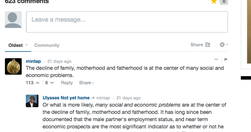
" Popular Science has officially shut off its comment section, pointing to research showing that disagreeable comments hurt the reading experience. Or, at least, the reading comprehension. One study out of the University of Wisconsin-Madison found that mean comments under an article about nanotechnology "polarized readers," taking attention away f…
www.niemanlab.org
"a new kind of reblogging functionality so that readers can top the articles they share with their own headlines and introductions.... “Publishing should be a collaboration between authors and their smartest readers. And at some point the distinction should become meaningless."
mabeam.net
"Scholars have worried that proliferation of personalization technologies will degrade public opinion by isolating people from challenging perspectives... study examines personalized news recommender system designs using a communication mediation model.... Results indicate increased selective exposure when using personalized news systems... portal…
mathewlowry.myhub.ai

"News in general doesn’t matter most of the time, and most people would be far better off if they spent their time consuming less news and more ideas that have more lasting import"
paidcontent.org

"The rtule native ad: Content that users can readily identify as sponsored (as with tourist ads), but that is easy for them to engage with. " But I wonder how many people actually realise the Facebook story example is sponsored?
paidcontent.org
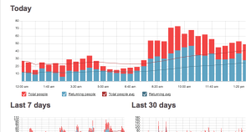
A great article on preventing the data tail wagging the editorial dog. " It turns out that what loyal audiences care about is what good editorial teams care about too: great articles that capture time and attention."
www.theatlantic.com

"That's about 100,000 business opportunities we provide publishers every minute." - good article on how slow the newsindustry was. Interesting thoughts too on balancing algorithmic approach with human concerns. Google News at 10 - The Atlantic http://t.co/Fupf11B6
www.poynter.org
"Almost six months after RebelMouse launched, the service is finding a home in the digital journalist’s toolbox."
www.niemanlab.org
"what we are trying to focus on is building a site that's optimized for those people who are news curators. For people that take joy and satisfaction out of sorting through all the stuff they read and identifying the best of that." - Newsana looks good. A model for @bloggingportal or a tool for Hubs? http://t.co/plsalGq0K2 profile on @NiemanLab
paidcontent.org

"The NewsCred announcement coincides with a shifting perspective on automated news. While some feared that the arrival of robot story writers and editors would phase out journalists, the human touch now appears to be back in fashion..." - Human touch back in fashion for news #curation? http://t.co/uQqLSTw5 via @NiemanLab cc @bloggingportal
mashable.com

If only RM also read the article you link to, auto-tagged it (auto-translating it if necessary) and provided faceted search, it'd probably provide 70-80% of a Hub. Neat tool for group efforts like bloggingportal, too.
mathewlowry.myhub.ai
An update to a post first published in 2013, as I created a first version of MyHub on Tumblr.
www.cjr.org

"and the idea was to get academic expertise and research into the broader public conversation."
Loading more...
Relevant Overviews
- Communication Strategy
- Content Strategy
- Online Strategy
- Online Community Management
- Social Media Strategy
- Content Creation & Marketing
- Online Architecture
- Digital Transformation
- Change & Project Management
- Personal Productivity
- Communications Tactics
- Psychology
- Social Web
- Media
- Politics
- Communications Strategy
- Science&Technology
- Business