
Tags
Filter 505 resources:
- ai (78)
- psychology (75)
- disinformation (68)
- news (61)
- social media (60)
- media (50)
- filter bubble (33)
- llm (28)
- facebook (28)
- community (28)
- atprotocol (27)
- politics (25)
- cognitive (23)
- storytelling (23)
- identity (21)
- productivity (20)
- algorithm (20)
- curation (20)
- trump (20)
- polarization (19)
- creativity (19)
- innovation (19)
- fediverse (18)
- design (18)
- journalism (17)
- trust (17)
- eu (17)
- science (16)
- democracy (15)
- myhub (14)
- regulation (14)
- management (13)
- content strategy (13)
- participation (12)
- backfire effect (11)
- knowledge management (11)
- communications (11)
- privacy (11)
- data visualisation (10)
- tool (10)
- bias (10)
- blogging (10)
- factchecking (10)
- top3pods (10)
- propaganda (10)
- chatgpt (10)
- ai4communities (9)
- open web (9)
- us2020 (9)
- yanss (9)
- us (9)
- comments (9)
- twitter (9)
- censorship (9)
- evidence-based policy (8)
- machine learning (8)
- zettelkasten (8)
- science journalism (8)
- conspiracy (8)
- podcast (8)
- blockchain (8)
- confirmation bias (8)
- publicsphere (8)
- bullshit (8)
- bluesky (8)
- writing (8)
- covid19 (8)
- science communication (7)
- explainer (7)
- guide (7)
- troll (7)
- culture (7)
- populism (7)
- annotate (7)
- ux (7)
- brexit (7)
- minimalist (6)
- bot (6)
- digital transformation (6)
- semantic (6)
- unfinished (6)
- surveillance (6)
- data (6)
- persuasion (6)
- copyright (6)
- post-truth (6)
- echo chamber (6)
- 2ndbrain (6)
- activitypub (5)
- online architecture (5)
- startup (5)
- narratives (5)
- metrics (5)
- nlp (5)
- tribe (5)
- organisation (5)
- platform (5)
- business model (5)
- cambridge analytica (5)
- media literacy (5)
- audience research (5)
- inscrutable (5)
- augmented reality (5)
- google (5)
- ethics (5)
- bbc (5)
- collective intelligence (5)
- (5)
- open source (5)
- design thinking (5)
- russia (4)
- ethan mollick (4)
- cory doctorow (4)
- atomisation (4)
- longform (4)
- advertising (4)
- gpt-x (4)
- enewsletter (4)
- ocm (4)
- memory (4)
- antivaxxer (4)
- leaflet (4)
- roamresearch (4)
- interoperability (4)
- decentralised (4)
- web design (4)
- search (4)
- gamification (4)
- sovereignty (4)
- intro (4)
- usa (4)
- ai prompt (4)
- framework (4)
- policy (4)
- atprotocol lexicon (3)
- dunning-kruger (3)
- machine text (3)
- personal (3)
- meme (3)
- interactive (3)
- virtual reality (3)
- 360video (3)
- moderation (3)
- andy matuschak (3)
- mastodon (3)
- autosummarise (3)
- project management (3)
- change (3)
- interface (3)
- adversarial interoperability (3)
- cards (3)
- leadership (3)
- hr (3)
- gdpr (3)
- futurism (3)
- expertise (3)
- engagement (3)
- laurens hof (3)
- fascism (3)
- k4p (3)
- ai-agent-gpt (3)
- audiovisual (3)
- evolution (3)
- sublime (3)
- wisdom (3)
- collaboration (3)
- agile (3)
- sceptic (3)
- data journalism (3)
- fear (3)
- society (3)
- standard.site (3)
- philosophy (3)
- content marketing (3)
- blacksky (3)
- marketing (3)
- stream (3)
- transparency (3)
- compositional (3)
- bestof2015 (3)
- biology (2)
- reddit (2)
- video (2)
- groupthink (2)
- linkedin (2)
- truth (2)
- network effect (2)
- attentionweb (2)
- psychometrics (2)
- behaviour (2)
- china (2)
- free speech (2)
- computational propaganda (2)
- nytimes (2)
- wikipedia (2)
- digital (2)
- internal communications (2)
- happiness (2)
- influence (2)
- chat (2)
- knowledge illusion (2)
- mobocracy (2)
- native advertising (2)
- content (2)
- hate (2)
- motivated (2)
- partisan (2)
- coral (2)
- newsroom (2)
- perception (2)
- hoax (2)
- inoculation (2)
- local (2)
- scrollytelling (2)
- religion (2)
- climate (2)
- automation (2)
- visual (2)
- network theory (2)
- uk (2)
- empathy (2)
- holacracy (2)
- coda (2)
- discourse (2)
- authoritarianism (2)
- quartz (2)
- multilingualism (2)
- ethereum (2)
- authenticity (2)
- lobby (2)
- google analytics (2)
- signaltonoise (2)
- radio (2)
- future (2)
- longreads (2)
- internet (2)
- bloggingportal (2)
- wiki (2)
- ecosystem (2)
- drupal (2)
- usp (2)
- game (2)
- social (2)
- information architecture (2)
- employee engagement (2)
- credibility (2)
- brussels bubble (2)
- disgustology (2)
- indieweb (2)
- cofoe (2)
- pluralistic ignorance (2)
- deep fake (2)
- art (2)
- domestic (2)
- memex (2)
- obsidian (2)
- signal2noise (2)
- nft (2)
- web3 (2)
- knowledge graph (2)
- note (2)
- openai (2)
- autogpt (2)
- alignment (2)
- harpa (2)
- centaur (2)
- douglas rushkoff (2)
- rag (2)
- jeff jarvis (2)
- joan westenberg (2)
- idpi (2)
- model collapse (2)
- bluesky custom feeds (2)
- groundmist (2)
- grjte (2)
- age verification (2)
- atconnect (2)
- gander (2)
- spambot (1)
- rewild (1)
- freedom (1)
- consumer (1)
- dark pattern (1)
- analytics (1)
- user (1)
- circa (1)
- big data (1)
- persona (1)
- cms (1)
- liquid democracy (1)
- whitewind (1)
- app (1)
- publishing (1)
- mixed reality (1)
- blog (1)
- insurrection (1)
- freeourfeeds (1)
- grassroots (1)
- explanatory (1)
- messaging (1)
- glue work (1)
- webgl (1)
- 3d (1)
- shawn murphy (1)
- mind meld (1)
- bitcoin (1)
- software (1)
- storymapjs (1)
- monetisation (1)
- plagiarism (1)
- atavist (1)
- ahoy2025 (1)
- gender (1)
- false enforcement (1)
- ipr (1)
- zkp (1)
- training (1)
- apple (1)
- purpose (1)
- guidelines (1)
- zappos (1)
- laloux (1)
- teal (1)
- rss (1)
- ecology (1)
- story (1)
- network (1)
- networking (1)
- open science (1)
- b2b4me (1)
- medium (1)
- api (1)
- language (1)
- millennials (1)
- australia (1)
- technology (1)
- iot (1)
- presentation (1)
- amazon (1)
- roi (1)
- bandwagon (1)
- multitasking (1)
- cryptocurrency 2.0 (1)
- ubi (1)
- healthcare (1)
- framing (1)
- brain (1)
- gds (1)
- taxonomy (1)
- purity spiral (1)
- postmodern (1)
- kickstarter (1)
- mike masnick (1)
- pinterest (1)
- cookies (1)
- anisota (1)
- renée diresta (1)
- vote (1)
- opinion (1)
- kipclip (1)
- language technology (1)
- visualisation (1)
- semble (1)
- mvp (1)
- green (1)
- subsidiarity (1)
- data void (1)
- hololens (1)
- bookmark (1)
- migration (1)
- quiz (1)
- jtbd (1)
- liability (1)
- popvox (1)
- define (1)
- solr (1)
- selfish (1)
- posse (1)
- event (1)
- infographic (1)
- bertelsmann (1)
- antitrust (1)
- monopoly (1)
- risk (1)
- digital civility (1)
- overfitting (1)
- elaboration (1)
- aspire (1)
- geofence (1)
- pro (1)
- sociology (1)
- blackpr (1)
- fakebox (1)
- information labs (1)
- sapiens (1)
- alexandra geese (1)
- threadapalooza (1)
- gatsby (1)
- substack (1)
- education (1)
- metaphor (1)
- process (1)
- curiosity (1)
- dsa (1)
- syllabus (1)
- polbot (1)
- energy vampire (1)
- security (1)
- ussr (1)
- intuition (1)
- imposter syndrome (1)
- understanding (1)
- zuboff (1)
- viral (1)
- infowar (1)
- goodwill (1)
- po.et (1)
- unreality (1)
- critical theory (1)
- woke (1)
- qanon (1)
- devops (1)
- claude code (1)
- guardian (1)
- infopocalypse (1)
- myers briggs (1)
- nudge (1)
- stack overflow (1)
- participatory culture (1)
- splinternet (1)
- fleeting (1)
- solid (1)
- deletefacebook (1)
- filecoin (1)
- gab (1)
- planetary (1)
- scuttlebutt (1)
- trust net (1)
- sensemaking (1)
- tiktok (1)
- gas town (1)
- garden (1)
- spaced repetition (1)
- arg (1)
- standards (1)
- crowdtangle (1)
- search-or-create (1)
- plato (1)
- metaverse (1)
- cookiepocalypse (1)
- fedwiki (1)
- stacked note (1)
- ub (1)
- cozyweb (1)
- map (1)
- dries buytaert (1)
- integrate (1)
- procurement (1)
- notion (1)
- ostrom (1)
- beeple (1)
- defi (1)
- coopetition (1)
- wallet (1)
- cooperatives (1)
- multisig (1)
- elon musk (1)
- joe basser (1)
- pkm (1)
- ontology (1)
- spark (1)
- ite (1)
- procrastination (1)
- 3p framework (1)
- business (1)
- subconscious (1)
- gordon brander (1)
- defensibility (1)
- twitter migration (1)
- dikw (1)
- information (1)
- perplexity.ai (1)
- vancouver2026 (1)
- boris mann (1)
- digital garden (1)
- dark forest web (1)
- ted chiang (1)
- startupy (1)
- liberalism (1)
- stochastic parrot (1)
- christopher manning (1)
- emily m bender (1)
- instagram (1)
- bingchat (1)
- cloud (1)
- paul frazee (1)
- agent (1)
- meditation (1)
- assistant (1)
- tailwind (1)
- brand (1)
- permissioned data (1)
- specification gaming (1)
- alphafold (1)
- reinforcement learning (1)
- recursion (1)
- deep learning (1)
- ezra klein (1)
- safety (1)
- persona prompt (1)
- giannigiacomelli (1)
- myhub chat (1)
- composable (1)
- quality (1)
- boston consulting group (1)
- atmosphereconf2026 (1)
- jagged frontier (1)
- cyborg (1)
- warning (1)
- autogen (1)
- ai-vision (1)
- questy (1)
- quit (1)
- atscience (1)
- al (1)
- jason butterfield (1)
- oxa (1)
- threads (1)
- nostr (1)
- empath (1)
- alan blackwell (1)
- acorn (1)
- enshittification (1)
- optimism (1)
- sari azout (1)
- overview (1)
- synthesise (1)
- flow state (1)
- notebooklm (1)
- commoditisation (1)
- new public (1)
- pluriverse (1)
- vsop (1)
- pubhub (1)
- robert putnam (1)
- will storr (1)
- richard dawkins (1)
- dopamine (1)
- roundabout (1)
- grift (1)
- ludicity (1)
- nature magazine (1)
- reality (1)
- ourobouros (1)
- blaine cook (1)
- talia stroud (1)
- eli pariser (1)
- comics (1)
- free (1)
- lean canvas (1)
- mobile (1)
- casey newton (1)
- cor (1)
- crowdsourcing (1)
- embodiment (1)
- storyline (1)
- team (1)
- wireframe (1)
- gtd (1)
- anthropomorphic (1)
- chinese room (1)
- reflectivity (1)
- token (1)
- remote (1)
- omission (1)
- conference (1)
- open data (1)
- outrage (1)
- dialogue (1)
- desirability (1)
- complex (1)
- anthropocentric (1)
- tutorial (1)
- group (1)
- brave (1)
- ideation (1)
- meritocracy (1)
- extraheric (1)
- immigration (1)
- consent (1)
- blogger (1)
- ruben verborgh (1)
- meeting (1)
- egovernment (1)
- panproto (1)
- history (1)
- homophily (1)
- truth psychology (1)
- “illusory (1)
- personalisation (1)
- multimedia (1)
- misinform (1)
- cmv (1)
- blogpocalypse (1)
- italy (1)
- disruption (1)
- paywall (1)
- career (1)
- facial blindness (1)
- capgras (1)
- emotion (1)
- rural (1)
- rationality (1)
- promotion (1)
- loyalty (1)
- moments (1)
- magazine (1)
- vox (1)
- uncertainty (1)
- bayes (1)
- fomo (1)
- debunk (1)
- slack (1)
Relevant Overviews
- Bluesky and the ATmosphere
- Communication Strategy
- Content Strategy
- Knowledge4Policy
- Fediverse
- Online Strategy
- Online Community Management
- Social Media Strategy
- Content Creation & Marketing
- Online Architecture
- Digital Transformation
- Personal Productivity
- Innovation Strategy
- Communications Tactics
- Psychology
- Social Web
- Media
- Politics
- Communications Strategy
- Science&Technology
- Business
- Large language models
informationlabs.org
A 21page "report brings together the perspectives of seven leading experts from fields including children's rights, psychology, computer science, cryptography, and family advocacy... reach a remarkably consistent conclusion: the harms children face online are real, but blanket social media bans fail to address their underlying causes."Instead, the…
www.ietf.org
An IETF Internet-draft (a working document) which "describes solution-agnostic and technology-neutral schema for how various intermediaries can gate content and services based on age" Two dimensions are analysed:"efficacy of permitting or restricting access based on age,privacy costs of doing so.The document concludes with recommendations as well …
connectedplaces.online

Laurens Hof analyses the Pope's Magnifica Humanitas on “safeguarding the human person in the age of Artificial Intelligence”, finding Leo has a lot to say about the challenges facing the fediverse and atmosphere.
donohoe.dev

Michael asks a good question and opens a can of worms, and starts by noting that "the community bookmark lexicon... [is] minimal: a URL, timestamp, tags". He wonders whether it also needs "additional fields...visibility (public vs unlisted)notestitledescriptionauthorpublication datesite namethumbnail imagecanonical URLprovenance (where a bookmark …
www.natesilver.net
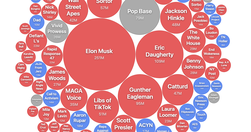
Nate Silver starts with a history lesson from the March 2014 re-launch of FiveThirtyEight, when "Publishers believed that maximizing “reach”, particularly as measured by the number of monthly unique visitors, was the key to success", which meant gaming Facebook's News Feed algorithm. That didn't work, as facebook and publishers were "locked into a…
ionosphere.tv
An absolutely wonderful speech at AtmosphereConf 2026 from Blaine Cook, who is developing Roundabout for New Public. No slides, almost nothing about technology ... but lots of cheese. The following distinction is essential to understand "what it means to build the sort of software we want to see in the world:Engineering trains you to specify desir…
acorn.blacksky.community
The feeds you want, the moderation your community needs, and the people you trust — all under your brand.
oxa.dev

The Continuous/Modular science pioneers have "taken the first step toward bringing scientific documents onto" the Atmosphere: "OXA now defines an AT Protocol lexicon ... This post introduces the lexicon, explains the design decisions behind it, and describes where we’re headed"It starts by pointing out that although atproto was developed for socia…
atmosphereaccount.com
"One account for all your apps. Yours to keep, wherever you go." - a 1page explainer of what an atprotocol DID* is.* we seem to have settled on "Atmosphere account"
jasonbutterfield.ca

SF author and IT specialist Jason Butterfield is a Gander beta-tester, and in his feed people ask “Why would I want to see Bluesky posts on my feed?". His answer, he believes, "requires moving beyond the concept of ‘apps’ and into the realm of digital sovereignty. We have to stop thinking like tenants and start thinking like citizens [as] For the …
dholms.leaflet.pub
Dainel, head of protocol at Bluesky, has published a series of leaflets on permissioned data for atproto.The first post introduces what permission data actually is - "a broad term, it covers many different social modalities & data flows. In its most basic sense, it means “not public”... data that lives on your PDS but isn't broadcasted... only acc…
baldemoto.leaflet.pub
"We guarantee that users aren’t subject to platforms. Yet communities are still subject to their stewards. Can we fix this?" asks this brilliant 4-part series, which I'm Hubbing in one post as I await part 4.Part 1 basically sets out the problem: today's online communities resemble platforms, in that the community's stewards (OCMs) determine every…
connectedplaces.online

Laurens uses Mastodon's new Share button - which frames Mastodon "not as one implementation of a shared protocol but as a platform" - to explore protocol ownership, showing how "The fediverse built its federation layer on an open standard, but left the client layer to be captured by its dominant provider". That dominant provider is Mastodon, and …
www.pfrazee.com
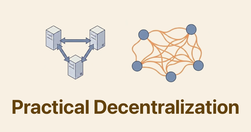
Paul Frazee clearing up confusion surrounding Atproto, ActivityPub and Nostr. The latter two "are good examples of "federated hosts" and "magical meshes," ... Atproto draws inspiration ... but it works like neither".Firstly, though, let's not put the cart before the horse: "The point of decentralization is to guarantee the rights of individuals an…
blog.joebasser.com
Joe Basser, Spark founder, is also one of the best explainers on the Atmosphere.Building on his previous post, which explains that "When users can leave without losing [everything]... platforms lose the ability to quietly tighten the screws forever", Basser explores what happens as a result: "What does social media look like when anti-enshittifica…
Like
algorithm,
social media,
guide,
interoperability,
bluesky custom feeds,
atprotocol,
standard.site,
coopetition,
joe basser,
spark
dri.es

Drupal founder on "Open Source alone won't deliver digital sovereignty. Europe must fix procurement and fund those who actually build it... doesn't require building the European equivalent of Microsoft or Google... [but] Europe has ... some of the world's strongest Open Source communities, regulatory reach, and public sector scale."While "Open S…
overreacted.io

A perfectly brilliant way to introduce AT protocol."What do files have to do with social computing? Historically, not a lot—until recently."Dan first reintroduces files: how they were not originally intended "to live inside the apps... [but] somewhere that you control. Apps create and read your files on your behalf, but files don’t belong to the a…
lab.leaflet.pub
The creators' account of their co-development of, and move to, standard.site, "and how we plan to grow publishing × open social together".Standard.site is "a set of shared standards for longform publishing on the open social web...a set of AT Protocol lexicons for:publication metadata: what a publication is, like its name, description, and basic t…
dri.es

Drupal founder Dries Buytaert: "Looking back, the most important things I learned weren't really about software. They were about people, scale, and what it takes to build something that lasts. Twenty-five years, twenty-five lessons."I won't list them all here, just reflecting on those that resonate with and/or surprise me the most:"Growth and gene…
steve-yegge.medium.com
A 34 minute read: "Gas Town helps you with the tedium of running lots of Claude Code instances", or its competitors. It's unpolished, 100% vibe coded, and only for those at Stage 7 of the 8 stage AI-assisted coding journey, "or maybe Stage 6 and very brave", because "Gas Town is an industrialized coding factory manned by superintelligent chimpanze…
www.youtube.com

Remember this next time you're arguing with someone on the internet:"Hey, can you mansplain any louder?""Yeah, sure!"
standard.site
"Standard.site provides shared lexicons for long-form publishing on AT Protocol. Making content easier to discover, index, and move across the ATmosphere" - by the makers of leaflet, pckt & offprint - a good example of how builders can just collaborate on the ATmosphere without drama: "The standard grows when builders identify shared needs and ali…
Like
open web,
longform,
blog,
collective intelligence,
myhub,
atprotocol,
atprotocol lexicon,
leaflet,
standard.site
www.pfrazee.com
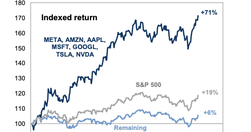
Bluesy's Paul Frazee on where cloud computing went: "the clouds are closed... they'll do everything well except interoperating with others. But there's nothing that says clouds have to be closed. Closed networks are a big company thing, not a cloud thing... We need to bridge our clouds... Atmospheric computing is a paradigm of connected clouds".O…
blackskyweb.xyz
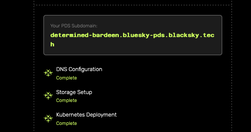
Necessity is the mother of invention, which is why innovation comes from the edge: here's Rudy celebrating a year of Blacksy with some quite remarkable announcements."I need to live in a world where I can privately send that friend money for anything from groceries to car repairs without it being woven into some CRIMINAL CONSPIRACY NARRATIVE and w…
lab.leaflet.pub

The producers would "love to make Leaflet better for scientists", and set out some ideas how.Annotations: "Semble is working on a lexicon for inline annotations which sounds cool and may have some overlap with Leaflet... Something like post references is closely related"References and backlinks, referencing Semble's "trackbacking... basically a b…
plurality.leaflet.pub
Articulates what I was saying in Berlin, but makes a better case from the researchers' perspective:"Researchers' identities are fragmented. Grant IDs, ORCID, institutional email addresses, ResearchGate, Google Scholar, and various social media platforms... The core of "who I am" depends too heavily on institutions and platforms."Instead of thinkin…
stevenberlinjohnson.com
NotebookLM co-founder has until now "described NotebookLM as a tool for understanding and exploring the information you need... But we also think NotebookLM could be an AI-first distribution platform, amplifying expert knowledge on a wide range of topics... a preview of that vision: Featured Notebooks...the backstory... We’re going to be able to b…
traverse.connectedplaces.online
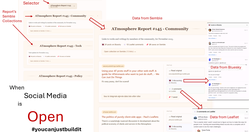
Laurens Hof, chronicler of all things open social web, uses Semble to curate interesting resources for his one-man media operation. And now he's built this one-page interface to all the stuff he's curating on Semble.But he's not getting that content from Semble - he's grabbing it from his own PDS, and combining it with links to where people are di…
www.techpolicy.press

Alexandra Geese on the EC's "first-ever non-compliance decision under the Digital Services Act against X ... a necessary first step in enforcing European digital regulation... [but] not sufficient to address the systemic risks posed by X... systematic amplification of certain political content and the systematic suppression of others" as part of "…
nekomimi.leaflet.pub
Nekomimo "built cutebook, a tiny library that lets you add a guestbook to any website. Visitors sign in with their Bluesky account, leave a message, and that message gets stored in their own data repository. No database on your end. No user accounts to manage. Just two web components and a few lines of configuration" - and she explains how, and ho…
Loading more...
Relevant Overviews
- Bluesky and the ATmosphere
- Communication Strategy
- Content Strategy
- Knowledge4Policy
- Fediverse
- Online Strategy
- Online Community Management
- Social Media Strategy
- Content Creation & Marketing
- Online Architecture
- Digital Transformation
- Personal Productivity
- Innovation Strategy
- Communications Tactics
- Psychology
- Social Web
- Media
- Politics
- Communications Strategy
- Science&Technology
- Business
- Large language models