
Relevant Overviews
- Bluesky and the ATmosphere
- Content Strategy
- Knowledge4Policy
- Fediverse
- Online Community Management
- Social Media Strategy
- Content Creation & Marketing
- Digital Transformation
- Personal Productivity
- Innovation Strategy
- Communications Tactics
- Psychology
- Social Web
- Media
- Politics
- Communications Strategy
- Science&Technology
- Business
Overview: Bluesky and the ATmosphere
The ATmosphere is the information ecosystem based on ATproto, the protocol developed by and for Bluesky. More interconnected apps are emerging. The potential for better online conversations is profound... if adequate revenue streams can be confirmed.
(last edit: February 2025)
Just as Mastodon is on the Fediverse, an information ecosystem where it and other apps can interact using the ActivityPub protocol, the Bluesky protocol (ATproto) underpins the ATmosphere ecosystem. In 2025, I'm betting that this is the most promising ground for #AI4communities.
Origins: Bluesky
ATproto was originally going to underpin Twitter before Elon Musk bought it. Moreover, when the Bluesky team then spun off from Twitter, they decided to keep many things unchanged, making the transition easier for people fleeing X.
The result looked and felt so similar that many people didn't spot how the open, permissionless nature of this new environment set Bluesky apart. Some key Bluesky features include:
- Custom feeds, each a subset of the Bluesky firehose, tuned to a particular community's interests and moderation preferences, created by anyone using a variety of 3rd party tools (see Bluesky custom feeds) and usable by anyone by simply pinning the feed to their interface
- Labellers apply labels to accounts - like custom feeds, anyone can create one, using a variety of tools, and anyone can subscribe to them if they want to see the label
- Block/mute lists are a sort of labeller: subscribe to one and you'll never see content from anyone on the list in your timeline
- Starter packs package a list of up to 150 people and (optionally) custom feeds relevant to a particular topic, and provide a feed of the people's posts.
- 3rd party apps: you don't need to use the official Bluesky app - there are many others, and because the ATmosphere is permissionless they won't go the way of Tweetdeck.
Enter the ATmosphere
The ATmophere is a permissionless ecosystem - anyone can build anything they like, and can access the Bluesky feed, without having to get Bluesky Social PBC's permission.
So, like Mastodon, Bluesky is not the only kid on its protocol block: in mid-2024 the Whitewind blogging platform launched, and within a few months a plethora of other apps were in beta, including Instagram- & TikTok lookalikes (all tools tagged #atproto and #tool).
Is it decentralised?
Yes, but not as decentralised as Fediverse. The key arguments in this once-fractious debate were both articulated and calmed by two protocol engineers: Christine Lemmer-Webber (ActivityPub co-author) and Bryan Newbold of Bluesky, who exchanged three enormous blog posts. After reading, annotating and generally struggling through all three (and more), I came out with a few conclusions (paraphrased from my newsletter from December 2024 and January 2025):
- There are different degrees of decentralisation, and different ways to get there. A comparison between the relatively mature Fediverse and Bluesky, with its brand-new protocol, is therefore tricky, particularly as Bluesky is focusing first and foremost on providing an X-like experience as possible for everyone fleeing X, which required certain choices to be made.
- There are too many blog posts, not enough wikis - someone should lock these two in a room somewhere until they come up with a text they both agree on
- I hope this protocol competition will evolve until the two spaces complement each other, as:
- ATProto's shared-heap model structurally favours few servers, "and thus has a natural centralizing force"
- ActivityPub has an incentive to keep the average followers/user low.
- the Fediverse will therefore probably remain a good place for cozyweb spaces, and co-exist with more global conversations on the more centralised and business-like ATmosphere.
- The world needs both.
What does the ATmosphere represent?
I first saw this when I published my December newsletter, and an extract from it as a stand-alone post, on Whitewind (see everything I Do or Think tagged #Whitewind).
When you sign up to blog on Whitewind, you use your Bluesky ID, and your blog posts live in your Bluesky Personal Data Store. So it's your content, and if Whitewind disappears, you can take it with you to another provider (or build your own), and all of your links keep working. Whitewind doesn't own you. You own you.
Moreover, there's "seamless comments integration with BlueSky: a comment posted to the blog is shared on the commenter's Bluesky account, and whenever someone shares the post on Bluesky it also appears under the post" - Thinking transparently in the ATmosphere.
The code for that integration is freely available, so this has massive implications for website-based communities, among other things.
One of those other things is #ai4communities, which was originally more Fediverse-oriented when I first started articulating it in January 2023. In 2024 I began revisiting it on my experimental wiki with a "technology-agnostic" post accompanied by sub-pages exploring how it would look on the Fediverse, the ATmosphere and (tbd) Nostr. The exercise convinced me that the ATmosphere is most promising, which is why it's been the focus of recent newsletters.
Relevant resources
mathewlowry.leaflet.pub
"Last Friday I welcomed two "steps in the right direction" from W Social. But timing is everything."
mathewlowry.myhub.ai
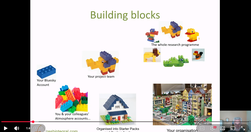
As ill health prevented me from attending the Aster launch on 12th October 2026, I decided to provide attendees with something they can take back to their colleagues about how the increasing number of scientists on Bluesky can be turned into "win-wins" for scientific institutions and the scientists working within them.Bluesky accounts are in fact …
wsocial.news
The LinkedIn blogpostis actually quicker to read, but the actual constitution is a nice use of scrollytelling.Of particular note is the migration tool, announced a little earlier, as that does remove one of the major red flags for me (they had assured me it would happen, but they've lied before).Also new: "a verified-only feed, watch live broadcas…
aster.place
I contributed to the launch of Aster in October 2026 (both the actual website and the thinking behind it, and the launch event at IOSP 2026: "An account and hosting for researchers on the open web: a place where you build and own your identity, website, data and connections. Independent, not-for-profit, and built by researchers, for researchers."
blog.aster.place
"The Aster PDS is live and the invite phase is open. The hard part comes next" - a post I contributed to the Aster launch, covering the hard questions we'll need to answer regarding verificiation: "Who counts as a "researcher or and academic"? ... What exactly are we identifying" by giving someone an Aster ID and PDS, and "How do we indicate any …
blog.joebasser.com
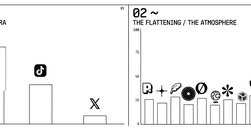
Joe Basser points out that publishing longform on the Atmosphere works as intended: "interoperability [means] ... The writer chooses where to publish. The reader chooses where to read. Neither needs to accept one company’s version of the entire experience", but he has a question: "Now imagine the article costs twenty cents. Who gets paid?"Obviousl…
Like
social media,
business model,
longform,
unfinished,
atprotocol,
atproto adoption,
joe basser,
permissioned data
mosaic-program.org
Modular Open Science, AI & Collective Intelligence - "MOSAIC is an R&D program to build a new medium for networked research... integrates modular research tools, open social networks, and AI to solve crucial coordination bottlenecks, democratize science and radically accelerate breakthroughs."while Ai can multiple an individual scientist's product…
denys.dev
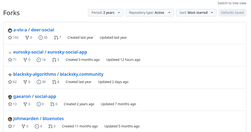
"part of a series debunking myths and clarifying misconceptions about W Social" - quite a good post, despite the faint air of desperation inevitable to any such post.Key points:"Identity verification isn’t about sacrificing privacy...The key is user control - ensuring that your data stays in your hands, not the platform’s."Here I have a problem as…
www.ietf.org
An IETF Internet-draft (a working document) which "describes solution-agnostic and technology-neutral schema for how various intermediaries can gate content and services based on age" Two dimensions are analysed:"efficacy of permitting or restricting access based on age,privacy costs of doing so.The document concludes with recommendations as well …
mathewlowry.leaflet.pub
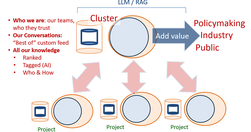
"Two types of Atmosphere toolkit are needed if ATScience is to help scientists do science and better communicate it to other audiences: one serving the researchers and their teams, the other focused on aggregation and synthesis."
Think
k4p,
science,
science communication,
science journalism,
evidence-based policy,
atprotocol,
atscience
mathewlowry.leaflet.pub
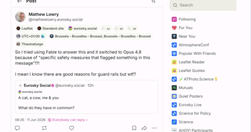
what else are you not seeing because you live inside LinkedIn’s filter bubble?
connectedplaces.online

Laurens Hof analyses the Pope's Magnifica Humanitas on “safeguarding the human person in the age of Artificial Intelligence”, finding Leo has a lot to say about the challenges facing the fediverse and atmosphere.
notes.wesleyfinck.org
Wesley of semble has "been thinking about standardization and sharing lexicons" for a while, as "saving and organizing links" is a pretty common activity. He's inspired by standard.site's approach: "they define a content property on the site.standard.document, leaving the actual shape of the documents content up to the app that implements it" and…
donohoe.dev

Michael asks a good question and opens a can of worms, and starts by noting that "the community bookmark lexicon... [is] minimal: a URL, timestamp, tags". He wonders whether it also needs "additional fields...visibility (public vs unlisted)notestitledescriptionauthorpublication datesite namethumbnail imagecanonical URLprovenance (where a bookmark …
augment.ink
"Disperse is a website, bookmarklet, linkable service, and (soon) a browser extension that allows you to share in several different formats across the Atmosphere all at once... a service like Buffer ... for the Atmosphere... giving the user a view of all of the different destinations they can share to without needing to create multiple accounts.…
blog.elenarossini.com
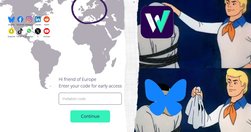
Interesting post on WSocial's announcement and its aftermath: "The contrast between the media hype and the reality was so jarring, that I decided to start collecting evidence and share what I found". An accurate summary of the "disbelief and a touch of anger" created by the launch, particularly how they presented Bluesky as American whilst not men…
ionosphere.tv
An absolutely wonderful speech at AtmosphereConf 2026 from Blaine Cook, who is developing Roundabout for New Public. No slides, almost nothing about technology ... but lots of cheese. The following distinction is essential to understand "what it means to build the sort of software we want to see in the world:Engineering trains you to specify desir…
joinroundabout.com

New_ Public "is creating Roundabout... help ... you start a healthy online space... in rural and suburban towns, and city neighborhoods — areas with about 10,000-50,000 people."Features include:event calendarlocal guideshelps and recommendationsinformation and updatebusiness openingseducationparentinga newcomer's guide to town.An alternative to "N…
www.hipstersmoothie.com

"My labeler uses data from Open Secrets to add labels to politicians on Bluesky... Democracy dies in darkness, so let's shine a light. This is just the start for what's possible on Bluesky."
acorn.blacksky.community
The feeds you want, the moderation your community needs, and the people you trust — all under your brand.
oxa.dev

The Continuous/Modular science pioneers have "taken the first step toward bringing scientific documents onto" the Atmosphere: "OXA now defines an AT Protocol lexicon ... This post introduces the lexicon, explains the design decisions behind it, and describes where we’re headed"It starts by pointing out that although atproto was developed for socia…
blog.stream.place
"ATmosphereConf 2026 was recorded live on Streamplace. All talks are now available as VODs ... But there's no frontend yet. That's where you come in." - and the competition is on!The basic idea here is specific to video but can be applied anywhere: "Solving video for everybody forever means: many apps, many websites, thousands of unique experience…
www.jamesrball.com
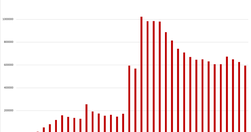
The author posted something that led to some controversy... "The subject that had proved so contentious? Bluesky’s user numbers." So here he provides "an attempt to get some more concrete numbers to look at", as well as some nuance. Some key points:"In the first few days of April 2026, average daily posters had fallen to the level of September 202…
atmosphereaccount.com
"One account for all your apps. Yours to keep, wherever you go." - a 1page explainer of what an atprotocol DID* is.* we seem to have settled on "Atmosphere account"
jasonbutterfield.ca

moved here SF author and IT specialist Jason Butterfield is a Gander beta-tester, and in his feed people ask “Why would I want to see Bluesky posts on my feed?". His answer, he believes, "requires moving beyond the concept of ‘apps’ and into the realm of digital sovereignty. We have to stop thinking like tenants and start thinking like citizens [a…
mathewlowry.leaflet.pub
If you had asked me a year ago, I would have told you that the ATProtocol was the future of social media. If you'd asked me at the end of last year, I would have told you that it was the future of the web, as well. Today I think it could be bigger even than that.
experiments.myhub.ai
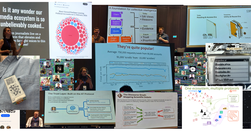
"My personal path through AtmosphereConf 2026 was all about making the web social; streams, gardens and communities; and science, AI & news. Welcome to the linkfest"
experiments.myhub.ai
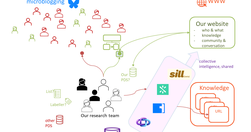
As my ATScience workshop in Vancouver wasn't streamed, I thought I'd throw together a quick video and publish some first thoughts and supporting notes, just to get a record of the content online before I turn to the rest of what was probably the best conference I've ever attended.
Think
social media,
science,
bluesky custom feeds,
atprotocol,
sill,
leaflet,
semble,
sovereignty,
standard.site,
atmosphereconf2026,
atscience
masnick.com
Echoing (unconsciously!) my thoughts of a year ago, Mike Masnick's recap opens with "It really does feel like the early days of the web... “we can just build things” is real... opening up a wonderful level of creativity... SO MUCH NEW STUFF".Apart from the general celebration;while the Atmosphere is not just Bluesky, the ecosystem is unbalanced: …
toni.org
According to Bluesky Social's new CEO, "what struck me most about this one was the wide range of projects" - not just social apps, but also "wildfire coordination tools for the US fire service, decentralized AI and biomedical knowledge networks, and creating shared infrastructure to connect astronomy observatories".He was also a youandme.at enjoy…
Relevant Overviews
- Bluesky and the ATmosphere
- Content Strategy
- Knowledge4Policy
- Fediverse
- Online Community Management
- Social Media Strategy
- Content Creation & Marketing
- Digital Transformation
- Personal Productivity
- Innovation Strategy
- Communications Tactics
- Psychology
- Social Web
- Media
- Politics
- Communications Strategy
- Science&Technology
- Business